
Mounjaro10 min read8 September 2026
Wegovy vs Mounjaro: what is the difference and which is better?
You have been reading up on medical weight loss and two names keep coming up: Mounjaro and Wegovy. Both are a weekly injection, both are licensed for weight management. Which is better, which is cheaper and can you switch?
 By Nagita Grover-Khatri
 Medically reviewed by Nazanin Ahmadi Mozafari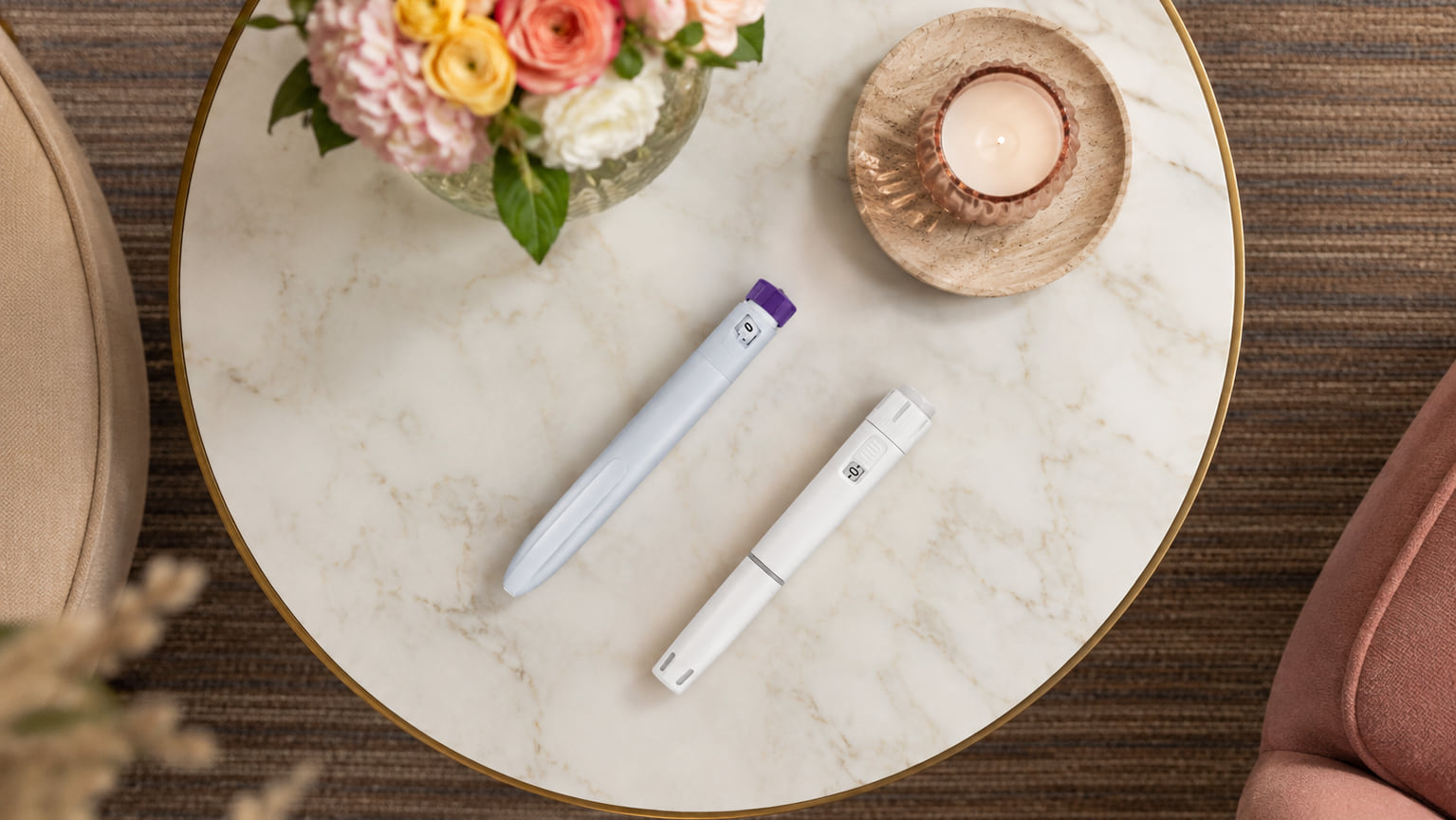
Mounjaro or Wegovy: the difference in one table
Mounjaro and Wegovy differ in active substance, mechanism of action, dose steps and price. They share the weekly injection, the step-by-step build-up, the BMI threshold and the reimbursement status: neither is covered by basic health insurance (basisverzekering) for weight loss. Status: September 2026. Read more about the Mounjaro golden dose.
| Mounjaro | Wegovy | |
|---|---|---|
| Active substance | Tirzepatide | Semaglutide |
| How it works | GLP-1 and GIP receptor agonist (two hormones) | GLP-1 receptor agonist (one hormone) |
| Manufacturer | Eli Lilly | Novo Nordisk |
| Licensed in the EU for | Type 2 diabetes (2022) and weight management (2024) | Weight management (2022) |
| BMI threshold | 30 or higher, or 27 with a weight-related condition | 30 or higher, or 27 with a weight-related condition |
| Administration | Once a week under the skin, KwikPen | Once a week under the skin, FlexTouch pen (also licensed as a tablet) |
| Dose steps | 2.5 mg start, steps of 2.5 mg every 4 weeks at least, up to 15 mg | 0.25 mg start, to 2.4 mg maintenance in 16 weeks |
| Reimbursed for weight loss | No | No (Zorginstituut Nederland advice 2024: not in the basic package) |
| Reimbursed for type 2 diabetes | Yes, under Appendix 2 (bijlage 2) conditions | Not applicable (Ozempic exists for that) |
| Pharmacy price per pen (4 weekly doses) | €176.57 (2.5 mg) to €419.46 (12.5 and 15 mg) | €105.59 (0.25 mg) to €196.70 (2.4 mg) |
| Half-life | About 5 days | About 1 week |
Prices: Farmacotherapeutisch Kompas (the Dutch national medicines reference), September 2026, excluding pharmacy fees. Read more about Mounjaro and Wegovy.
How do tirzepatide and semaglutide work?
Both medicines mimic the gut hormone GLP-1, which is released after eating and tells your brain that you are full. They curb the appetite, slow gastric emptying and lower blood sugar. Tirzepatide adds something: it also activates the receptor for GIP, a second gut hormone that influences insulin release and fat metabolism. Read more about the Mounjaro diet.
According to the European Medicines Agency (EMA), Mounjaro is licensed for type 2 diabetes and for weight management in adults with a BMI of 30 or higher, or 27 with a weight-related condition. Wegovy has the same BMI threshold, but is only licensed for weight management; for diabetes, the same substance is available under the brand name Ozempic.
Whether the second hormone makes the difference in practice is shown by the studies below. You can read more about the substances themselves in our articles on tirzepatide and semaglutide.
What do the studies show?
There is one study that compares the two medicines directly in people with obesity without diabetes: the SURMOUNT-5 study (New England Journal of Medicine, 2025). In it, 751 participants received the highest tolerated dose of tirzepatide (10 or 15 mg) or semaglutide (1.7 or 2.4 mg) for 72 weeks. The tirzepatide group lost an average of 20.2 percent of their body weight, the semaglutide group 13.7 percent. Waist circumference also decreased more with tirzepatide: 18.4 versus 13.0 centimetres.
The licensing studies of each medicine separately point the same way. In the main Wegovy study, participants lost an average of 15 percent after 68 weeks, compared with 2 percent on placebo. In SURMOUNT-1, participants on tirzepatide lost an average of 15 to 21 percent in 72 weeks, depending on the dose.
Three caveats. These are averages: the spread between people is large, and some participants respond better to semaglutide than the average on tirzepatide. SURMOUNT-5 was open-label and funded by the manufacturer of Mounjaro. And "more weight loss" does not automatically mean "better": tolerability, health and price also count. Read more about the Mounjaro KwikPen.
Side effects and drawbacks of Mounjaro and Wegovy
The side effects of both medicines are largely the same: nausea, vomiting, diarrhoea, constipation and abdominal pain, especially while the dose is being built up. In SURMOUNT-5, gastrointestinal symptoms were the most common side effect in both groups, usually mild to moderate and concentrated in the build-up phase.
The drawbacks of Mounjaro compared with Wegovy lie mainly in the price at the higher doses and in the shorter experience: tirzepatide has been on the market since 2022, semaglutide since 2018 (as Ozempic). A drawback of Wegovy is that the average effect is smaller and that the medicine has regularly been in short supply. Read more about Mounjaro reviews.
Both medicines carry the same warnings: inflammation of the pancreas (rare), gallstones with rapid weight loss, dehydration with persistent vomiting or diarrhoea, and low blood sugar in combination with diabetes medication. Neither is suitable during pregnancy, when trying to conceive or while breastfeeding. The details per medicine are in Mounjaro side effects and Wegovy side effects.
Dosage, pen and use side by side
You inject both medicines once a week under the skin, in the abdomen, thigh or upper arm, on a fixed day. The dosing schedule differs.
- Mounjaro: start with 2.5 mg per week, 5 mg after 4 weeks, then if needed in steps of 2.5 mg after at least 4 weeks each time, up to a maximum of 15 mg. The KwikPen contains four weekly doses of one strength.
- Wegovy: according to the EMA product information for Wegovy, you build up over 16 weeks to limit gastrointestinal symptoms: 0.25 mg, 0.5 mg, 1 mg, 1.7 mg (4 weeks each) and then the maintenance dose of 2.4 mg. The FlexTouch pen contains four weekly doses; recently a higher dose and a tablet form have also been licensed.
Practical difference: with Mounjaro you have more intermediate steps and the doctor can fine-tune the dose to your side effects. With Wegovy the schedule is more fixed and you reach the maintenance dose after 16 weeks. You handle missed doses the same way with both: inject within a few days, otherwise skip it.
Price and reimbursement in the Netherlands
Neither medicine is covered by basic health insurance for weight loss. For Wegovy, Zorginstituut Nederland (the Dutch National Health Care Institute) advised in July 2024 not to include it in the basic package; for Mounjaro in obesity, the assessment is still ongoing (first discussion planned for October 2026). Mounjaro is reimbursed for type 2 diabetes under certain conditions, and since 1 May 2026 also for diabetes patients with a very high risk of cardiovascular disease. How that works is covered in whether Mounjaro is covered by insurance.
If you pay yourself, the price difference depends on the dose. According to the Farmacotherapeutisch Kompas of Zorginstituut Nederland, a Mounjaro pen with four weekly doses costs €176.57 (2.5 mg), €245.54 (5 mg), €343.42 (7.5 and 10 mg) and €419.46 (12.5 and 15 mg). A Wegovy pen costs €105.59 (0.25 and 0.5 mg), €104.49 (1 mg), €164.49 (1.7 mg) and €196.70 (2.4 mg). So at the maintenance dose Wegovy is cheaper; at the lowest Mounjaro doses the prices are close. Reference date September 2026, excluding pharmacy fees.
With us, a medical weight loss with injections programme with tirzepatide (Mounjaro) costs €350 per month, plus a one-off €400 support fee, including medication, home delivery and support from your own BIG-registered doctor (the BIG register is the Dutch register of healthcare professionals). We do not offer Wegovy. The full price breakdown per medicine is in Mounjaro price and Wegovy price.
Tried everything and want to know which medicine the doctor would consider for you? Read how medical weight loss with injections works with us →
Can you switch from Mounjaro to Wegovy (or the other way round)?
Switching is possible, but only through the doctor and not one-to-one in dose. There is no official conversion table between tirzepatide and semaglutide. In practice, when switching you usually start on a low dose of the new medicine, and the doctor builds up faster if you tolerate it well, because your body is already used to a GLP-1 medicine.
Reasons to switch are side effects that do not go away, insufficient effect, availability or cost. Switching from Wegovy to Mounjaro happens more often than the other way round, usually at a plateau. Switching from Mounjaro to Wegovy happens because of side effects on the higher Mounjaro doses or for financial reasons.
In practice: the switch takes place on the day you would normally inject, without a break in between, unless the doctor advises otherwise. Expect some gastrointestinal symptoms again in the first weeks on the new medicine. Never switch on your own, and never combine the two.
Which medicine suits you? How the doctor chooses
The doctor does not choose on the basis of "which is better", but on what suits your situation. These factors play a part:
- Type 2 diabetes or disturbed blood sugar: both medicines lower blood sugar; in diabetes, the reimbursement status of Mounjaro is a factor.
- How much you want or need to lose: with a high BMI or many weight-related health problems, the larger average effect of tirzepatide can be decisive.
- Previous use and tolerability: people who had many symptoms on semaglutide sometimes get tirzepatide, and vice versa.
- Availability and budget: a medicine you can keep using consistently works better than the "strongest" medicine that you stop after three months.
- Contraindications: previous inflammation of the pancreas, severe kidney or liver problems, thyroid cancer in the family, wanting to become pregnant.
The doctor assesses whether medical weight loss is right for you and which medicine goes with it. That choice can change along the way, based on your response and your side effects.
Want to know whether medical weight loss is right for you? Take the eligibility check and the doctor will assess your situation →
Frequently asked questions about Mounjaro and Wegovy
Which is better, Mounjaro or Wegovy?
In the only direct comparison study (SURMOUNT-5), participants lost an average of 20.2 percent of their weight with tirzepatide and 13.7 percent with semaglutide in 72 weeks. That average does not tell the whole story: side effects, health and price also count, and the response differs from person to person. The doctor assesses which medicine suits you.
Which is cheaper, Mounjaro or Wegovy?
At the maintenance dose, Wegovy is cheaper: €196.70 per pen (2.4 mg) compared with €343.42 to €419.46 for Mounjaro (7.5 to 15 mg), according to the Farmacotherapeutisch Kompas (September 2026). At the starting doses the prices are closer. Neither is reimbursed for weight loss.
Can I switch from Mounjaro to Wegovy?
Yes, through the doctor. There is no official conversion table; you usually start on a low dose of the new medicine and build up under supervision. The other way round, from Wegovy to Mounjaro, works the same way. Never switch or combine on your own.
What are the drawbacks of Mounjaro?
The higher price at the top doses, the shorter experience with the medicine (since 2022) and the same gastrointestinal symptoms as with Wegovy. It is not reimbursed for weight loss. Rare risks are inflammation of the pancreas and gallstones.
How long does it take for Mounjaro to work?
You usually notice the reduced appetite within the first week; weight loss becomes visible after a few weeks, with the biggest effect at the higher doses after a few months. More in how fast does Mounjaro work.
What is the difference between Ozempic, Wegovy and Mounjaro?
Ozempic and Wegovy both contain semaglutide; Ozempic is licensed for diabetes, Wegovy for weight management. Mounjaro contains tirzepatide and acts on two hormones. The differences are covered in Wegovy vs Ozempic and Mounjaro vs Ozempic.
<!-- klant:eind -->Responsible for this information: Qlinic B.V., Markenhaven 25A, Amersfoort. Published: 8 September 2026. This article is general information and does not replace personal medical advice.
About the author
Nagita Grover-Khatri
Doctor · BIG 39912467601
Focuses on medical programmes for overweight, with attention to the person behind the numbers.
More about Nagita Grover-Khatri
Further reading

Mounjaro · 10 min
Mounjaro diet plan: what to eat and what to avoid, with a daily menu and recipes
By Nazanin Ahmadi Mozafari, doctor

Wegovy · 9 min
Wegovy vs Ozempic: what is the difference and which one do you get for weight loss?
By Nazanin Ahmadi Mozafari, doctor
Mounjaro · 9 min
Tirzepatide: the active substance in Mounjaro
By Nazanin Ahmadi Mozafari, doctor