
Weight loss medication10 articles · Updated 23 September 2026
All about Wegovy (semaglutide)
 By Nazanin Ahmadi Mozafari
 Medically reviewed by Nagita Grover-Khatri
More about Wegovy
You have come across the name Wegovy: in the news, at the GP or in a conversation about weight loss. Perhaps you are considering it yourself, or you first want to understand what it is exactly and what it does and does not do before you look further.
What is Wegovy?
Wegovy is a prescription medicine with the active ingredient semaglutide, registered for weight management in adults with obesity, or with overweight and a weight-related condition. You use it as a weekly injection alongside fewer calories and more exercise. It suppresses appetite via the gut hormone GLP-1. The manufacturer is Novo Nordisk.
The European Medicines Agency (EMA) authorised Wegovy in the European Union on 6 January 2022, including for young people from the age of 12 with obesity. Since 2026 the medicine has also been available as a tablet alongside the prefilled pen, for adults only. In the Netherlands, Wegovy is available on prescription, through a registered pharmacy.
How does Wegovy work?
Wegovy works because semaglutide mimics the gut hormone GLP-1. Your body produces that hormone itself after a meal. It signals to your brain that you are full, slows down the emptying of your stomach and keeps your blood sugar more stable.
You mainly notice the result at the table: you have fewer cravings, feel full sooner and think about food less. This makes it possible to eat less without being constantly hungry. So semaglutide does not change what you eat, but makes eating differently achievable. The effect lasts as long as you use the medicine.
Wegovy or Ozempic: the same substance, a different registration
Wegovy and Ozempic both contain semaglutide, but are registered for different conditions. Ozempic has been authorised since 2018 for type 2 diabetes, with a maximum dose of 2 mg per week. Wegovy is authorised for weight management and goes up to a maintenance dose of 2.4 mg per week.
That difference also determines reimbursement: Ozempic is covered under conditions for type 2 diabetes, Wegovy is not covered for weight loss. Using Ozempic to lose weight without diabetes is off-label. A milligram of semaglutide is the same in both pens; the difference lies in the registration, the available strengths and the pen. The full comparison is in the article Wegovy vs Ozempic.
Who is Wegovy intended for?
Wegovy is registered for adults with a BMI of 30 or higher, or of 27 or higher with at least one weight-related condition, such as high blood pressure, sleep apnoea, prediabetes or raised cholesterol. For young people from the age of 12, a separate registration applies for obesity with a body weight above 60 kilos.
The BMI threshold is a factual condition, not a commitment. Whether the medicine is right for you is assessed by the doctor, who looks at your medical history, your other medicines and the reasons why losing weight has not worked so far. Wegovy is not prescribed during pregnancy, if you are trying to conceive or while breastfeeding; if you have had pancreatitis (inflammation of the pancreas) in the past, or have severe kidney or liver problems or an eating disorder, the doctor weighs things up with extra care. If you want to know where you stand, you can use our BMI calculator.
Wegovy dosage and use in brief
You build up Wegovy over 16 weeks from 0.25 mg to the maintenance dose of 2.4 mg per week, with a new step every 4 weeks: 0.25, 0.5, 1, 1.7 and 2.4 mg. According to the Farmacotherapeutisch Kompas (the Dutch reference work on medicines) of Zorginstituut Nederland (the Dutch National Health Care Institute), there is also a 7.2 mg strength, for a limited group and only on the doctor's advice.
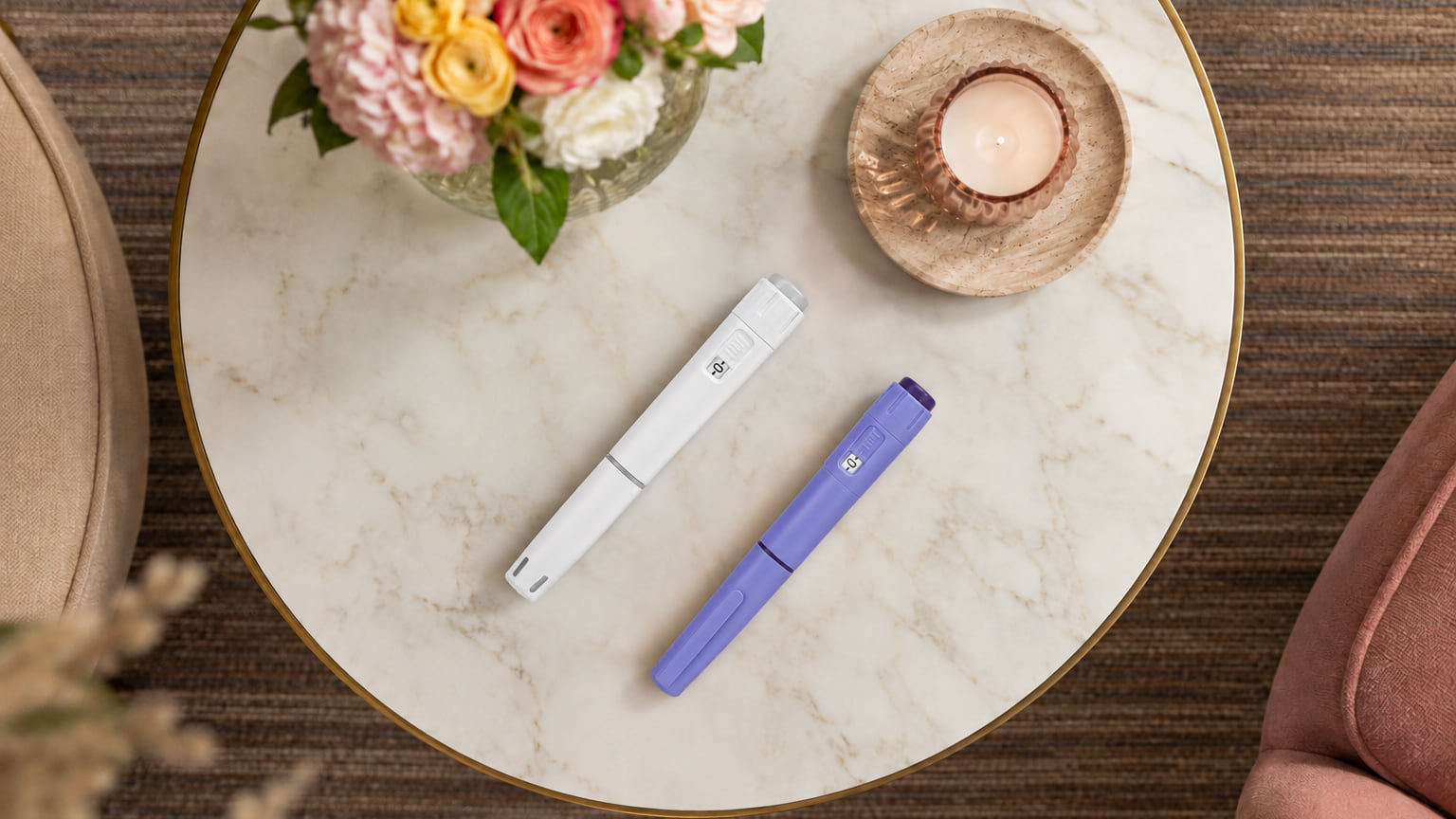
Each pen contains four doses of the same strength and therefore lasts 4 weeks. You inject once a week under the skin of your abdomen, thigh or upper arm, on a fixed day, with or without food. The slow build-up limits gastrointestinal complaints; if you do not tolerate a step well, you stay on the same dose for an extra 4 weeks in consultation with the doctor. The full dosing schedule, the pen instructions and what to do if you miss a dose are in the article Wegovy dosing schedule.
Wegovy side effects in brief
The most common side effects of Wegovy are nausea, diarrhoea, vomiting, constipation, abdominal pain, headache and fatigue. They occur in more than 1 in 10 users, mainly in the weeks after a dose increase. According to apotheek.nl, the patient information website of the pharmacists' organisation KNMP (the Royal Dutch Pharmacists' Association), the gastrointestinal complaints usually pass within 4 weeks.
Serious side effects are rare but you need to recognise them: pancreatitis (severe abdominal pain that radiates to the back), gallstones, dehydration from persistent vomiting and the very rare eye condition NAION, which the EMA added to the product information in 2025. If you notice such signs, call the doctor immediately. The full overview with frequencies, the course per dose step and the warning signs is in the article is Wegovy dangerous. If you enjoy a drink, also read Wegovy and alcohol.
What can you expect from Wegovy?
How much weight you lose with Wegovy varies from person to person; the research gives an average, not a prediction. In the STEP 1 trial, published in The New England Journal of Medicine in 2021, 1,961 adults with overweight or obesity without diabetes received 2.4 mg of semaglutide or placebo weekly for 68 weeks, alongside lifestyle support. The semaglutide group lost an average of 14.9% of their body weight, the placebo group 2.4%. At least 5% weight loss was achieved by 86% of semaglutide users.
In practice, the pace is not even. During the build-up phase the effect is limited, on the maintenance dose weight usually drops fastest and after some months it levels off. If you stop the medicine, your appetite returns and many people regain weight; that is why a plan for afterwards is part of every treatment. What users notice per phase, from the first injection to stopping, is covered in the article Wegovy reviews.
Tried everything and wondering whether a medical programme is right for you? Your own BIG-registered doctor (the BIG register is the Dutch register of healthcare professionals) assesses your situation and decides which medication fits. More about medical weight loss with injections →
Wegovy costs and reimbursement in brief
In the Netherlands you pay for Wegovy yourself. The medicine has not been included in the medicines reimbursement system and is therefore not covered by basic health insurance (basisverzekering) with any health insurer; supplementary insurance generally does not cover it either. According to medicijnkosten.nl from Zorginstituut Nederland (price level 1 July 2026), the pharmacy price is between €97 and €234 per pen of four weekly doses, depending on the strength. On the maintenance dose of 2.4 mg that comes to €184 to €234 per month, plus the pharmacy's dispensing costs and the doctor's costs.
Zorginstituut Nederland advised against reimbursing Wegovy in July 2024 and has been reassessing the medicine since November 2025 using a phased approach: first for people with a BMI of 30 or higher with a weight-related condition and for people with a BMI of 35 or higher, after a lifestyle programme. The first discussion by the Scientific Advisory Board (Wetenschappelijke Adviesraad) is scheduled for 5 October 2026; a final advice will follow after that. This page reflects the situation as of 23 September 2026.
The prices per strength are in the article Wegovy price; the reassessment, the conditions per insurer and the alternatives that are covered are in the article Wegovy insurance coverage. How reimbursement works for the whole group of medicines is covered in weight loss medication covered by insurance.
Buying Wegovy: only through a doctor and pharmacy
There is one legal way to buy Wegovy: a doctor assesses whether the medicine is right for you, writes a prescription, and a registered Dutch pharmacy supplies the pen. Without a prescription Wegovy is not available, not online either. A GP (huisarts) is allowed to prescribe it, but is often cautious for overweight without diabetes and usually refers you to a lifestyle programme first; an online clinic with a BIG-registered doctor is the other route.
Websites offering Wegovy without a prescription, through social media, Marktplaats (the Dutch classifieds site) or foreign webshops, supply pens of unknown origin. These sometimes contain the wrong dose, a different substance or no semaglutide at all. With an online provider, always check the EU logo and the government register aanbiedersmedicijnen.nl (the Dutch register of authorised online medicine sellers). The step-by-step plan and the features of a reliable offer are in the article buying Wegovy; what your GP does and does not do is covered in weight loss medication from your GP.
Wegovy as a tablet
Since 2026 Wegovy has also been available as a tablet: the EMA has registered the tablet form with semaglutide for weight management in adults, in strengths from 1.5 to 25 mg, to be taken once a day on an empty stomach. In the registration trial, participants taking the tablet lost an average of about 14% of their weight in 64 weeks; here too, the result varies from person to person.
Registration and availability are two separate steps. On 23 September 2026 the tablet was not yet routinely stocked in Dutch pharmacies and the price was not known. Rybelsus, the existing semaglutide tablet, is registered for type 2 diabetes and has a lower dose. You can follow the status of the Wegovy tablet in the article Wegovy tablets; what Rybelsus is and who it is intended for is covered in Ozempic pills.
Wegovy compared with Mounjaro and Saxenda
Wegovy is one of the three injections registered for weight management in the Netherlands, alongside Mounjaro (tirzepatide) and Saxenda (liraglutide). They differ in active ingredient, injection frequency, research results and reimbursement. As of September 2026:
| Wegovy | Mounjaro | Saxenda | |
|---|---|---|---|
| Active ingredient | semaglutide | tirzepatide | liraglutide |
| Mechanism | GLP-1 | GLP-1 and GIP | GLP-1 |
| Administration | once a week | once a week | once a day |
| Maintenance dose | 2.4 mg (or 7.2 mg) | 5 to 15 mg | 3 mg |
| Average weight loss in the registration trial | 14.9% in 68 weeks (STEP 1) | 15% to 21% in 72 weeks (SURMOUNT-1) | 8% in 56 weeks (SCALE) |
| Covered for weight loss | no, reassessment under way | no, reassessment under way | yes, under strict conditions (Annex 2, bijlage 2: the extra conditions in the Dutch medicines reimbursement system) |
Trial figures are averages from separate trials with different participants; they do not say how you will respond. In the only head-to-head comparison between Wegovy and Mounjaro (SURMOUNT-5, 2025), participants lost an average of 13.7% with semaglutide and 20.2% with tirzepatide; in the head-to-head comparison with Saxenda (STEP 8, 2022) it was 15.8% compared with 6.4%. More weight loss is not automatically better: tolerability, health and costs also count, and that is the doctor's assessment. The detailed comparisons are in Wegovy vs Mounjaro and Wegovy vs Saxenda.
How does it work at Qlinic?
Qlinic does not offer Wegovy. We offer one programme, medical weight loss with injections, in which your own BIG-registered doctor assesses whether medical weight loss is right for you and which medication fits. The doctor works with semaglutide, tirzepatide or liraglutide; the choice follows from your health, your medical history and how you respond to the medication, not from a brand preference set in advance.
The programme starts with a consultation. After that the doctor prescribes the medication, a registered Dutch pharmacy delivers it to your home, and the doctor follows up with you every 4 weeks: dose, side effects, weight and what changes in your eating pattern. If you have questions or complaints in between, that same doctor is available. The monthly price depends on the medication and is on the page with medical weight loss prices; an overview of all medicines is on the page about weight loss medication.
Want to know whether medical weight loss is right for you? A few questions show you where you stand; the doctor then assesses your situation. Take the eligibility check →
Frequently asked questions about Wegovy
What is the difference between Ozempic and Wegovy?
Both contain semaglutide. Ozempic is registered for type 2 diabetes and goes up to 2 mg per week; Wegovy is registered for weight management and goes up to 2.4 mg per week, and since 2026 has also been available as a tablet. Ozempic is covered under conditions for diabetes, Wegovy is not covered for weight loss.
Is Wegovy better than Ozempic?
For weight loss, Wegovy is the registered medicine and has a higher maintenance dose; in the STEP trials, 2.4 mg led to more weight loss than the lower Ozempic doses. Which medicine suits your situation is assessed by the doctor based on your health and availability.
How many kilos do you lose with Wegovy?
That varies from person to person. In the STEP 1 trial, participants lost an average of 14.9% of their body weight in 68 weeks with 2.4 mg of semaglutide, compared with 2.4% on placebo. At a weight of 100 kilos that is about 15 kilos on average; some people lose more, others less.
What are the risks of Wegovy?
Used correctly under a doctor's supervision, Wegovy is safe for most adults with overweight. Rare serious side effects are pancreatitis, gallstones, dehydration and the very rare eye condition NAION. The greatest risks lie in incorrect use: building up too quickly, no medical monitoring or pens of unknown origin.
How much does Wegovy cost per month?
Between €97 and €234 per pen of four weekly doses, depending on the strength (medicijnkosten.nl, price level 1 July 2026). On the maintenance dose of 2.4 mg that is €184 to €234 per month, plus dispensing costs and the doctor's costs. Health insurance does not cover Wegovy for weight loss.
What does one Wegovy pen cost?
One pen contains four weekly doses of the same strength and costs between €97 (lower strengths) and €234 (2.4 mg) at the pharmacy, price level 1 July 2026. So one pen lasts 4 weeks.
Can a GP prescribe Wegovy?
Yes, Wegovy is an ordinary prescription medicine that a GP is allowed to prescribe. In practice, GPs are cautious for overweight without diabetes and refer you to a lifestyle programme first. A prescription from your GP does not change reimbursement: you pay for the medicine yourself.
Medical weight loss with injections at Qlinic
Your own doctor assesses which medication suits you, in English or Dutch. If it is suitable, the prescription goes straight to a registered Dutch pharmacy and you are in touch with the same doctor every four weeks.
Sources
- European Medicines Agency (EMA), consulted at the time of publication.
- Farmacotherapeutisch Kompas, consulted at the time of publication.
- STEP 1 trial, consulted at the time of publication.
- Zorginstituut Nederland, consulted at the time of publication.
Responsible for this information: Qlinic B.V., Markenhaven 25A, Amersfoort. Last updated: 23 September 2026.
All articles about Wegovy
10 articles, written and medically reviewed by the Qlinic doctors. Choose a topic or search for a word.
10 articles found


Further reading

Wegovy · 7 min
Wegovy insurance in 2026: is it covered, and who comes first?
By Nazanin Ahmadi Mozafari, doctor

Wegovy · 9 min
Wegovy vs Ozempic: what is the difference and which one do you get for weight loss?
By Nazanin Ahmadi Mozafari, doctor
Wegovy · 10 min
Wegovy dosage and how to use the pen
By Nazanin Ahmadi Mozafari, doctor