
Mounjaro10 min read31 August 2026
Mounjaro reviews: what users notice, from the first week to the long term
You are considering Mounjaro or have just started, and you want to know what others experience. On forums and review sites you read all sorts of things side by side: from "finally some peace in my head around food" to "for the first few weeks I felt sick all the time". Both experiences are real, and they belong to different stages of use.
 By Nazanin Ahmadi Mozafari
 Medically reviewed by Nagita Grover-Khatri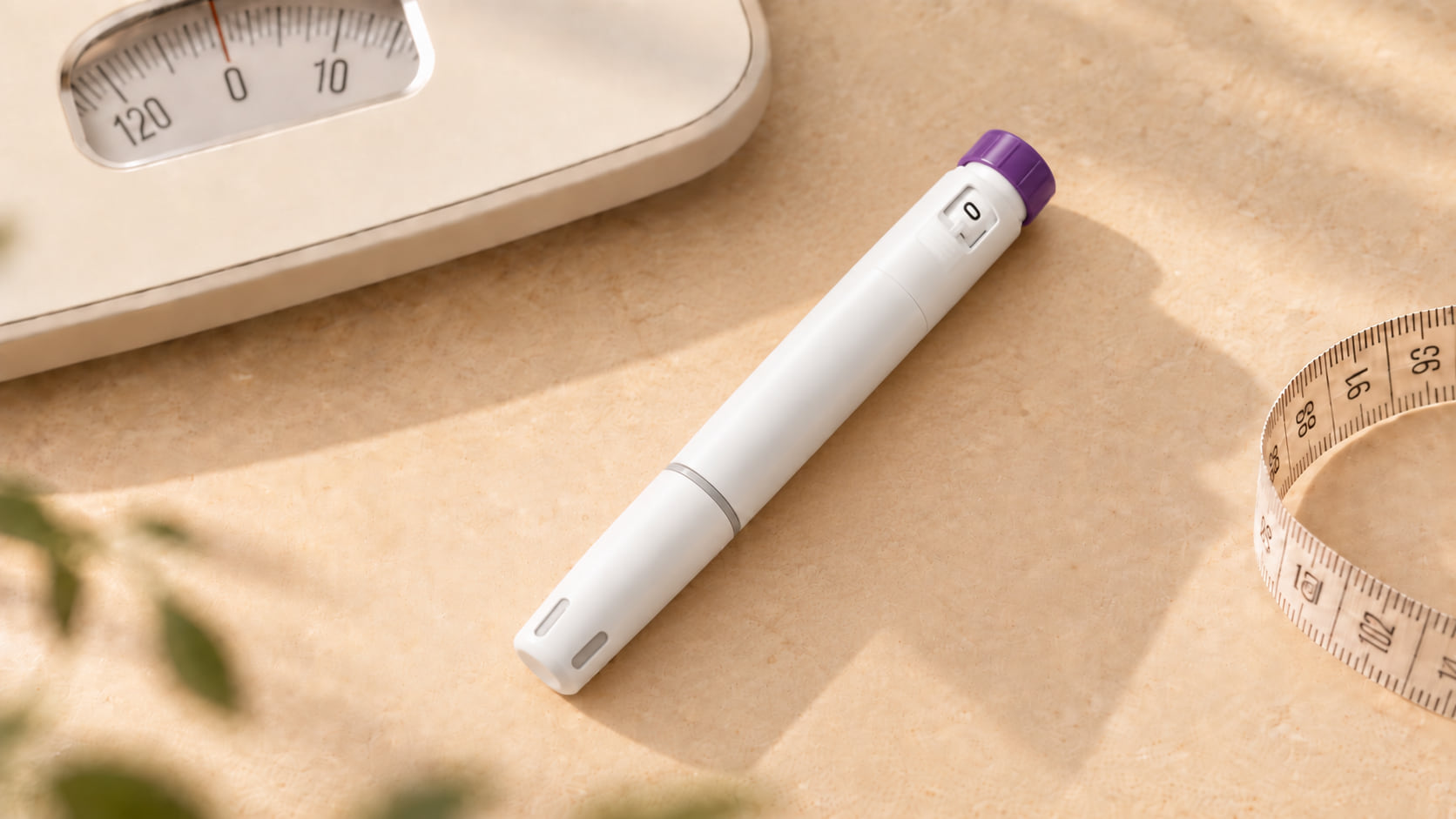
What users report most often
Users of Mounjaro most often report a much reduced feeling of hunger, smaller portions and fewer thoughts about food. On the other side are nausea, tiredness, constipation and burping, especially in the weeks after a dose increase. Weight usually falls gradually, at a pace that varies widely from person to person. Read more about Mounjaro vs Saxenda.
The broad picture from reviews, patient information leaflets and research: users mainly notice less hunger and more satiety, and the most commonly reported downsides are stomach and bowel complaints while the dose is being built up. Below you can read, stage by stage, what users report, which side effects are most common, why experiences differ so much and how to weigh experiences on forums. Read more about the Mounjaro golden dose.
Mounjaro in brief: what it is and how it works
Mounjaro is a weekly injection with the active substance tirzepatide. This substance mimics two gut hormones at the same time, GLP-1 and GIP. As a result you feel full sooner, your stomach empties more slowly and your blood sugar falls after a meal.
In the EU, Mounjaro is registered for type 2 diabetes and for weight management with a BMI of 30 or higher, or of 27 with a weight-related condition. You start on 2.5 mg per week and the doctor increases the dose in steps of 2.5 mg, with at least 4 weeks between each step, up to a maximum of 15 mg. That dosing schedule explains a large part of the experiences you read online. Read more about Mounjaro vs Wegovy.
What users notice in the first few weeks
In the first 4 weeks on the starting dose of 2.5 mg, most users already notice less hunger, but their weight often barely moves yet. The starting dose is meant to let your body get used to the medication, not to give the maximum effect. Only from 5 mg upwards do users usually report that the appetite suppression really takes hold.
| Stage | Dosage | What users often report |
|---|---|---|
| Weeks 1 to 4 | 2.5 mg | less appetite, feeling full sooner, sometimes nausea; weight falls slightly or not yet |
| Weeks 5 to 12 | 5 to 7.5 mg | clearly less hunger, smaller portions; side effects peak briefly after each increase |
| After 3 months | 7.5 to 15 mg | stable pattern, eating takes less effort; fewer side effects once the dose no longer changes |
How quickly you lose weight with Mounjaro varies from person to person. In the SURMOUNT-1 study (NEJM, 2022), participants with obesity lost an average of 15 to 21% of their body weight in 72 weeks, depending on the dosage; the placebo group lost 3.1%. These are averages over a year and a half with lifestyle support, not a prediction for your first months. You can read more about the pace in our article how fast does Mounjaro work after injection.
Positive experiences: less hunger, more calm around food
The positive experience users describe most often is peace of mind: the constant thinking about food falls away. Many users notice that they no longer need to clear their plate and that evening snacking decreases by itself.
Other frequently mentioned points:
- Smaller portions without a struggle: satiety comes sooner and lasts longer.
- Less craving for fat and sugar: some users report that their desire for snacks, soft drinks and alcohol decreases.
- More control: because hunger is less dominant, it becomes easier to stick to choices that failed before.
- Blood sugar and energy: users with type 2 diabetes report more stable readings; others describe a more even energy level after the build-up phase.
These experiences fit the way the medication works: tirzepatide acts on satiety in the brain and on gastric emptying. The medication does not change what you eat; it makes eating differently achievable.
Negative experiences: the side effects mentioned most often
Negative experiences with Mounjaro are almost always about the digestive system. According to Apotheek.nl, the patient information website of the Dutch pharmacists' organisation KNMP, 10 to 30 in every 100 users experience nausea, vomiting or diarrhoea. These complaints usually decrease once the body has got used to the dose.
Side effects mentioned by users and in the patient information leaflet, with the frequency from the leaflet:
- Very common (more than 1 in 10): nausea, vomiting, abdominal pain, diarrhoea, constipation, reduced appetite, tiredness.
- Common (1 in 10 to 1 in 100): burping and a bloated feeling, heartburn, dizziness, low blood pressure, hair loss, reactions at the injection site.
- Rare to very rare: gallstones, inflammation of the pancreas.
On forums you also see complaints that are not listed as separate side effects in the leaflet but are easy to explain: feeling cold and muscle aches (you eat less and lose weight, including muscle mass if you do not train), itching around the injection site and a "Mounjaro hangover" of tiredness in the days after the injection. The combination with alcohol is also mentioned often; read our article on Mounjaro and alcohol.
If you have severe, persistent abdominal pain, persistent vomiting or signs of dehydration, contact your doctor straight away. The full overview, including what you can do yourself, is in our article on Mounjaro side effects.
Experiences with the injection pen and the dosing schedule
Users are mostly positive about the pen itself: the needle is thin and short, the injection in the abdomen, thigh or upper arm takes a few seconds and most people get the hang of it after two or three times. The Mounjaro KwikPen contains four weekly doses; you set the dose, inject and hold the button down for a few seconds. Practical tips on storing and injecting are in our article on the Mounjaro pen.
The dosing schedule strongly determines how you experience the treatment. People who want to increase too quickly often get more nausea as a result, and do not lose weight any faster. If you stay on a dose where your hunger is well under control, you do not necessarily need to go up to 15 mg. The doctor decides which dose suits you based on effect and side effects; the schedule is in our article on Mounjaro dosage.
Does this sound familiar, and would you rather not do it alone? Your own BIG-registered doctor (the BIG register is the Dutch register of healthcare professionals) assesses whether medical weight loss suits you and guides you through dosage and side effects. Medical weight loss with injections →
Why experiences differ so much
Experiences with Mounjaro differ because four factors vary from person to person: the dosage, starting weight, lifestyle and support. Two people on the same dose can therefore tell a completely different story.
- Dosage and pace of increase: side effects are linked to how fast the dose is increased; the effect on hunger to how high the dose is.
- Starting weight and health: people with more to lose often lose more in absolute kilos; hormonal factors, medication and sleep also play a part.
- Diet and exercise: less hunger is an opportunity, not an automatic result. People who eat plenty of protein and do strength training keep more muscle mass and feel more energetic. A practical guide is in our article on a Mounjaro diet plan.
- Support: a doctor who adjusts the dose and helps with side effects prevents people from stopping too early. That is exactly where the difference lies between a stand-alone prescription and supervised medical weight loss with injections.
If you stop losing weight after a few months, that is a known pattern and not a sign that the medication "doesn't work". What you can do then is in our article on not losing weight on Mounjaro.
Long-term experiences and after stopping
In the long term, users mainly report that the side effects decrease and that the effect on hunger lasts as long as they keep using the injections. In 2022 the European Medicines Agency (EMA) assessed Mounjaro as effective and sufficiently safe for long-term use, with nausea, vomiting, abdominal pain, constipation and diarrhoea as the most common side effects.
The long-term downsides users mention are the cost, the weekly injections and the question of what happens after stopping. Research and experiences show the same thing: after stopping, appetite returns and many people regain weight. That is why tapering off only works well if you have changed your eating pattern and activity in the meantime. How to approach this is in our article on stopping Mounjaro.
Mounjaro or Ozempic: what users say
Users who switched from Ozempic to Mounjaro often report stronger appetite suppression and sometimes less nausea. That picture matches the first direct comparative study: in the SURMOUNT-5 study (NEJM, 2025), participants with obesity lost more weight on average after 72 weeks with tirzepatide than with semaglutide, and fewer participants stopped because of stomach and bowel complaints.
Still, "stronger" is not the same as "better for you". Semaglutide has a longer track record, a different price and a side effect profile that differs per person. Which medication suits you is a medical decision; the full comparison is in our article Mounjaro vs Ozempic.
Experiences on forums, Reddit and Trustpilot: how do you weigh them?
Forum experiences are valuable for recognition, but not as a yardstick for your own result. People who are very satisfied, or who have a lot of complaints, post more often than people who experience the treatment as "ordinary". Reddit threads also often come from the US, where dosages, prices and support differ from those in the Netherlands.
How to read experiences with a critical eye:
- Look at the stage: many negative reviews are about the first weeks after an increase.
- Look at the dose: an experience on 15 mg says little about 5 mg.
- Look at the source: reviews on sites that sell medication themselves are not a neutral source.
- Look at what is missing: before-and-after photos say nothing about diet, exercise or health.
You see similar patterns with all medications in this group; a broader picture is in our article on GLP-1 reviews.
Would you like to know whether medical weight loss is right for you? Take the short check and the doctor will assess your situation. Eligibility check →
Frequently asked questions about Mounjaro reviews
How quickly do you lose weight with Mounjaro?
That varies from person to person. In the SURMOUNT-1 study, participants lost an average of 15 to 21% of their weight in 72 weeks, depending on the dosage. The first weeks on the starting dose usually go slowly; the effect increases as the dose is built up.
How long does it take before Mounjaro starts to work?
Most users notice less hunger within 1 to 2 weeks. Visible weight loss usually follows in the weeks after that, and the full effect only develops on the higher doses after a few months of building up.
What are the negative experiences with Mounjaro?
The most commonly reported negative experiences are nausea, vomiting, diarrhoea, constipation, burping and tiredness, especially shortly after a dose increase. On forums, users also mention feeling cold, muscle aches, itching at the injection site and the cost.
What are the long-term downsides of Mounjaro?
The main long-term downsides are the cost, the weekly injections and the chance that the weight returns after stopping. Rare side effects such as gallstones and pancreatitis call for medical supervision during use.
Is Mounjaro stronger than Ozempic?
In the SURMOUNT-5 study, tirzepatide (Mounjaro) gave more weight loss on average after 72 weeks than semaglutide (Ozempic and Wegovy). Which medication suits you depends on your health, side effects and cost; the doctor assesses that.
Are experiences on Reddit and forums reliable?
They are useful for recognition, but not representative. Extreme experiences are shared more often, dosages and support differ per country, and reviews on sales sites are not independent. Discuss what you read with your doctor.
<!-- klant:eind -->Responsible for this information: Qlinic B.V., Markenhaven 25A, Amersfoort. Published: 31 August 2026. This article is general information and does not replace personal medical advice.
About the author
Nazanin Ahmadi Mozafari
Doctor · BIG 59925559301
Guides you from intake to follow-up and knows your file, no changing faces.
More about Nazanin Ahmadi Mozafari
Further reading


Mounjaro · 10 min
Mounjaro diet plan: what to eat and what to avoid, with a daily menu and recipes
By Nazanin Ahmadi Mozafari, doctor

Mounjaro · 10 min
Stopping Mounjaro: tapering off, what happens and how to keep the weight off
By Nazanin Ahmadi Mozafari, doctor

Mounjaro · 9 min
Tirzepatide: the active substance in Mounjaro
By Nazanin Ahmadi Mozafari, doctor