

Weight loss medication13 articles · Updated 23 September 2026
All about Saxenda (liraglutide)
 By Nazanin Ahmadi Mozafari
 Medically reviewed by Nagita Grover-Khatri
More about Saxenda
You have come across Saxenda as a weight loss medicine, through your GP, your health insurer or someone who uses it. Now you want to know what it is exactly, whether it suits your situation and what it means in practice: injecting every day, side effects, costs and reimbursement. Below you will find everything in one place.
What is Saxenda?
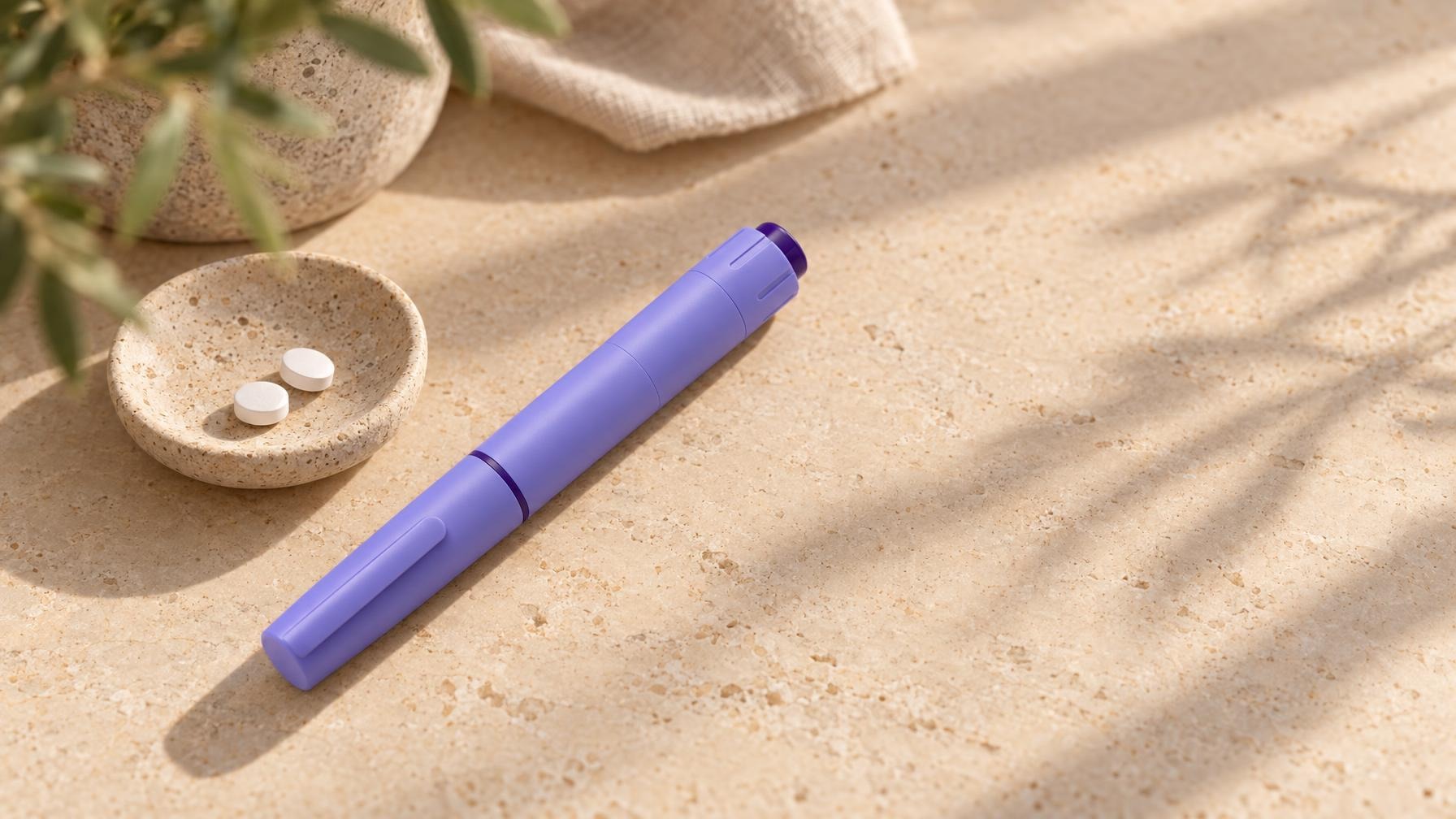
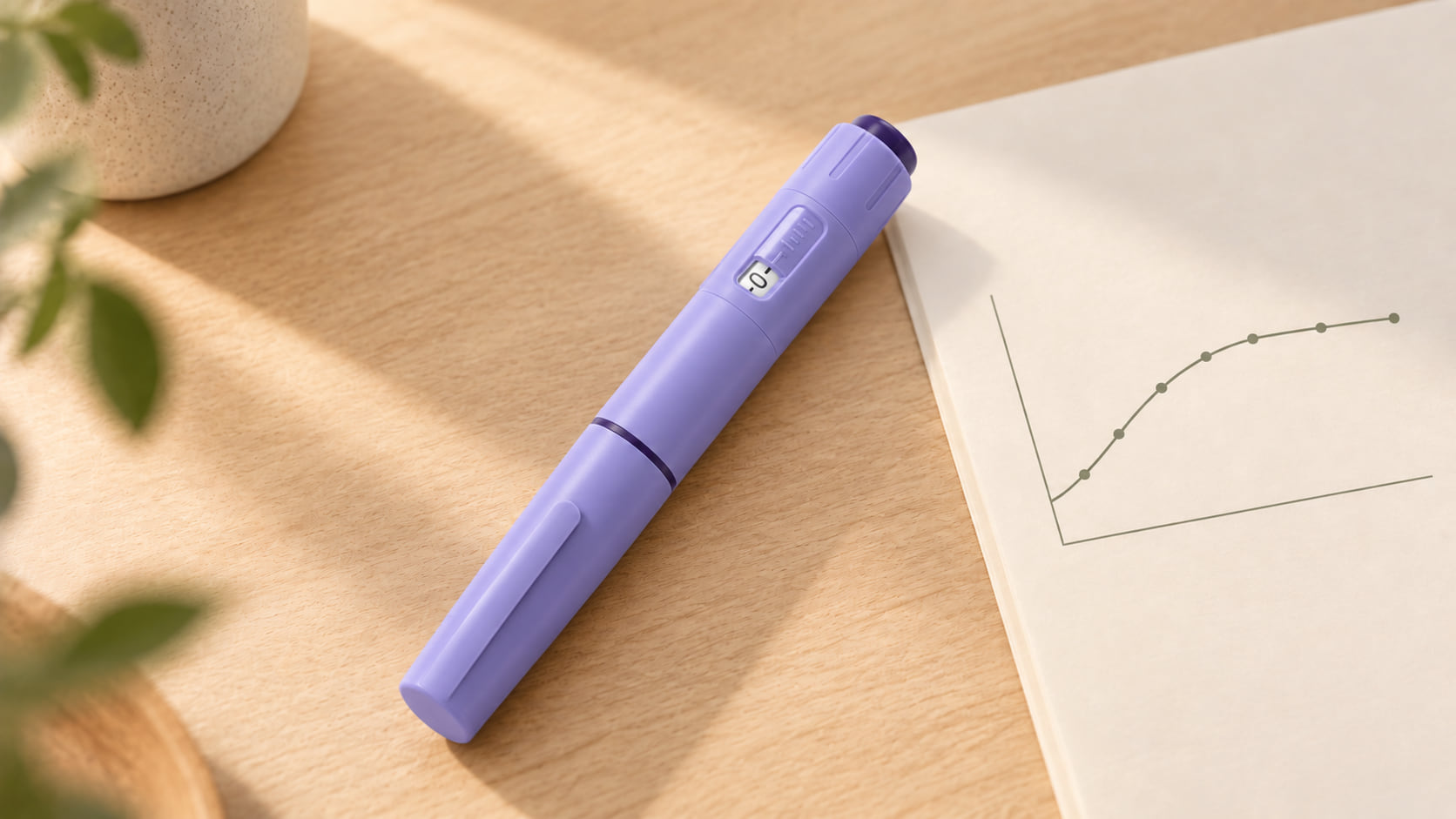
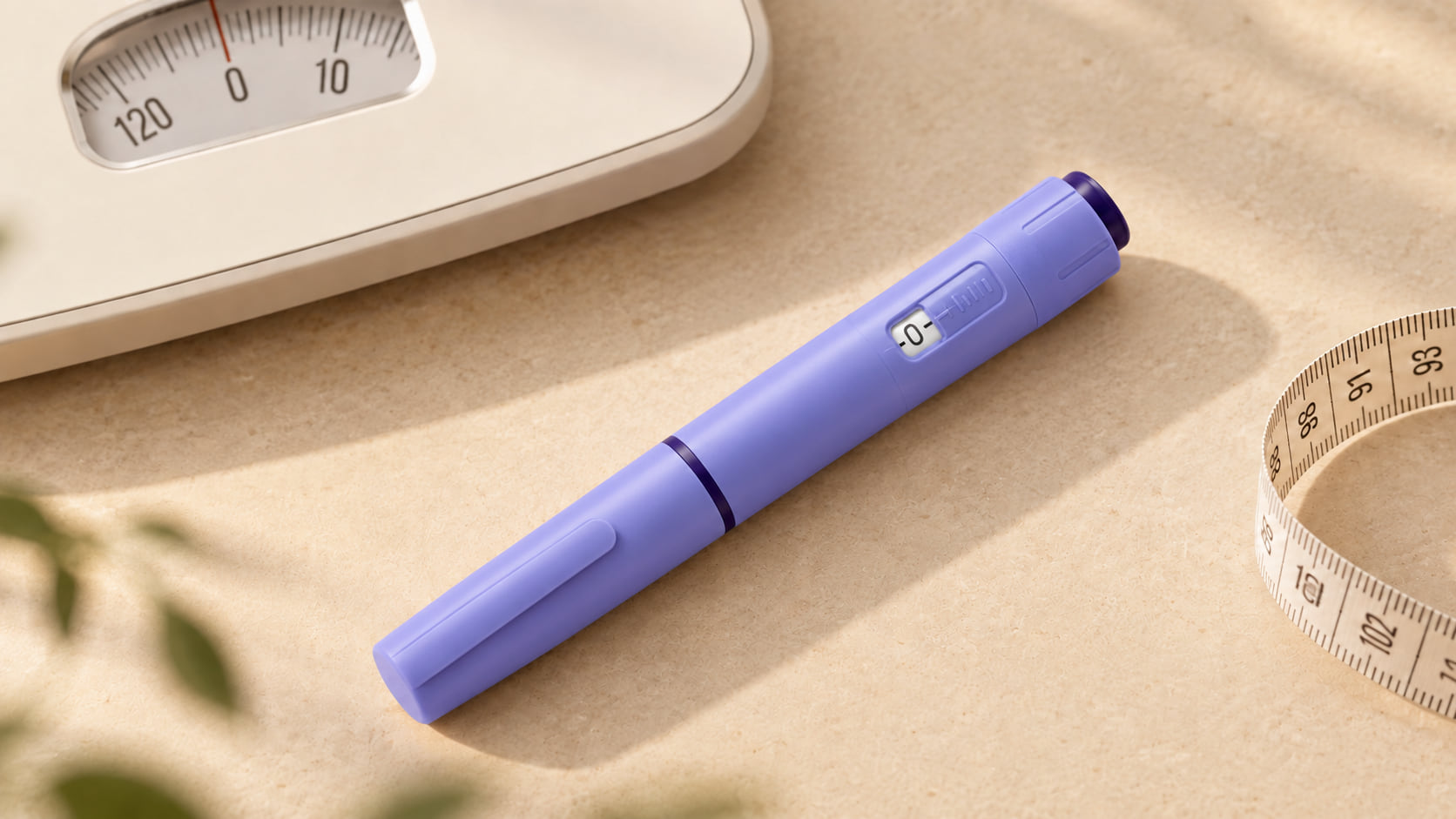
Saxenda is a medicine for weight management in overweight and obesity. It contains the active ingredient liraglutide, a GLP-1 receptor agonist that suppresses appetite. You inject it under the skin once a day with a prefilled pen. Saxenda is available on prescription only and has been registered in the EU since 2015.
Saxenda is made by Novo Nordisk and is intended as an addition to a low-calorie diet and more exercise, not as a replacement for them. The same active ingredient is in Victoza, which is registered for type 2 diabetes and has a lower maximum dose. Saxenda is the oldest GLP-1 medicine for weight loss and the only one that is covered under conditions by basic health insurance (basisverzekering) in the Netherlands. You will find an overview of all medicines on our page about weight loss medication.
How does Saxenda work?
Saxenda works by mimicking the gut hormone GLP-1. That hormone is released after a meal and signals to your brain that you are full. Liraglutide holds on to that signal for longer: you are less hungry, feel full sooner and therefore eat smaller portions. The medicine also slows down gastric emptying, so food stays in your stomach longer.
The medicine only lowers blood sugar when it is too high. Without diabetes medication, low blood sugar is therefore rare. How the hormone works exactly and why it has such a big effect on appetite is covered on our page about GLP-1.
Why do you inject Saxenda every day, while Ozempic and Wegovy are weekly? Liraglutide stays active in your body for about a day, semaglutide and tirzepatide for about a week. That is the main practical reason why Saxenda is a daily injection and the newer medicines are not.
Who is Saxenda for?
Saxenda is registered for adults with a BMI of 30 or higher, or a BMI of 27 to 30 in combination with a weight-related condition such as high blood pressure, type 2 diabetes or sleep apnoea. That is what the liraglutide product text of the Farmacotherapeutisch Kompas (the Dutch reference work on medicines) of Zorginstituut Nederland (the Dutch National Health Care Institute) states. Young people from the age of 12 with obesity and a body weight above 60 kilos are also covered by the registration.
That BMI threshold is a fact, not an admission ticket. Whether Saxenda suits your situation is assessed by the doctor. The doctor looks at your health, the medicines you use and what you have already tried. You can already work out your BMI yourself with our BMI calculator.
In a number of situations Saxenda is not used: during pregnancy, if you are trying to conceive or while breastfeeding, with severe heart failure or severe liver problems, at the age of 75 or older and in combination with other weight loss medication. If you have had pancreatitis (inflammation of the pancreas) in the past, or have severe kidney problems or an eating disorder, the doctor weighs things up with extra care. What applies to pregnancy is covered in our article on Saxenda and pregnancy.
How do you use Saxenda? The dosing schedule in brief
You build up Saxenda over five weeks from 0.6 mg to the maintenance dose of 3.0 mg per day. Each week the dose goes up by 0.6 mg. That slow schedule exists because liraglutide causes nausea and other gastrointestinal complaints at the start; building up gradually lets your body get used to it.
| Week | Dose per day |
|---|---|
| Week 1 | 0.6 mg |
| Week 2 | 1.2 mg |
| Week 3 | 1.8 mg |
| Week 4 | 2.4 mg |
| From week 5 | 3.0 mg (maintenance dose) |
You inject once a day, at a fixed time, in the abdomen, thigh or upper arm. It does not matter whether you inject before or after eating. You use a new needle for each injection. Keep an unused pen in the fridge; a pen you have started using keeps for a month. If you do not tolerate a step well, the doctor can keep you on the same dose for an extra week. Setting the pen, the injection sites and what to do if you miss a dose are covered step by step in our article on the Saxenda dosing schedule.
Saxenda side effects in brief
The most common side effects of Saxenda are nausea, vomiting, diarrhoea, constipation and headache. They occur in more than 10 in 100 users, mainly in the weeks in which you build up the dose, and usually decrease after that. Fatigue, dizziness, a dry mouth, gallstones and irritation at the injection site are also common, in 1 to 10 in 100 users. Liraglutide also raises your resting heart rate by a few beats per minute on average.
Rare but serious are inflammation of the pancreas and an allergic reaction. Call your doctor immediately if you have severe, persistent abdominal pain that radiates to your back, swelling of the face or throat, or if you become dehydrated from vomiting or diarrhoea.
You can ease most complaints yourself: small portions, limiting fatty and fried food, eating slowly and drinking enough. Alcohol is not forbidden, but it worsens the gastrointestinal complaints; how to deal with that is covered in our article on Saxenda and alcohol. A full overview per complaint, with what you can do yourself and when to call, is in our article on Saxenda side effects.
What can you expect from Saxenda?
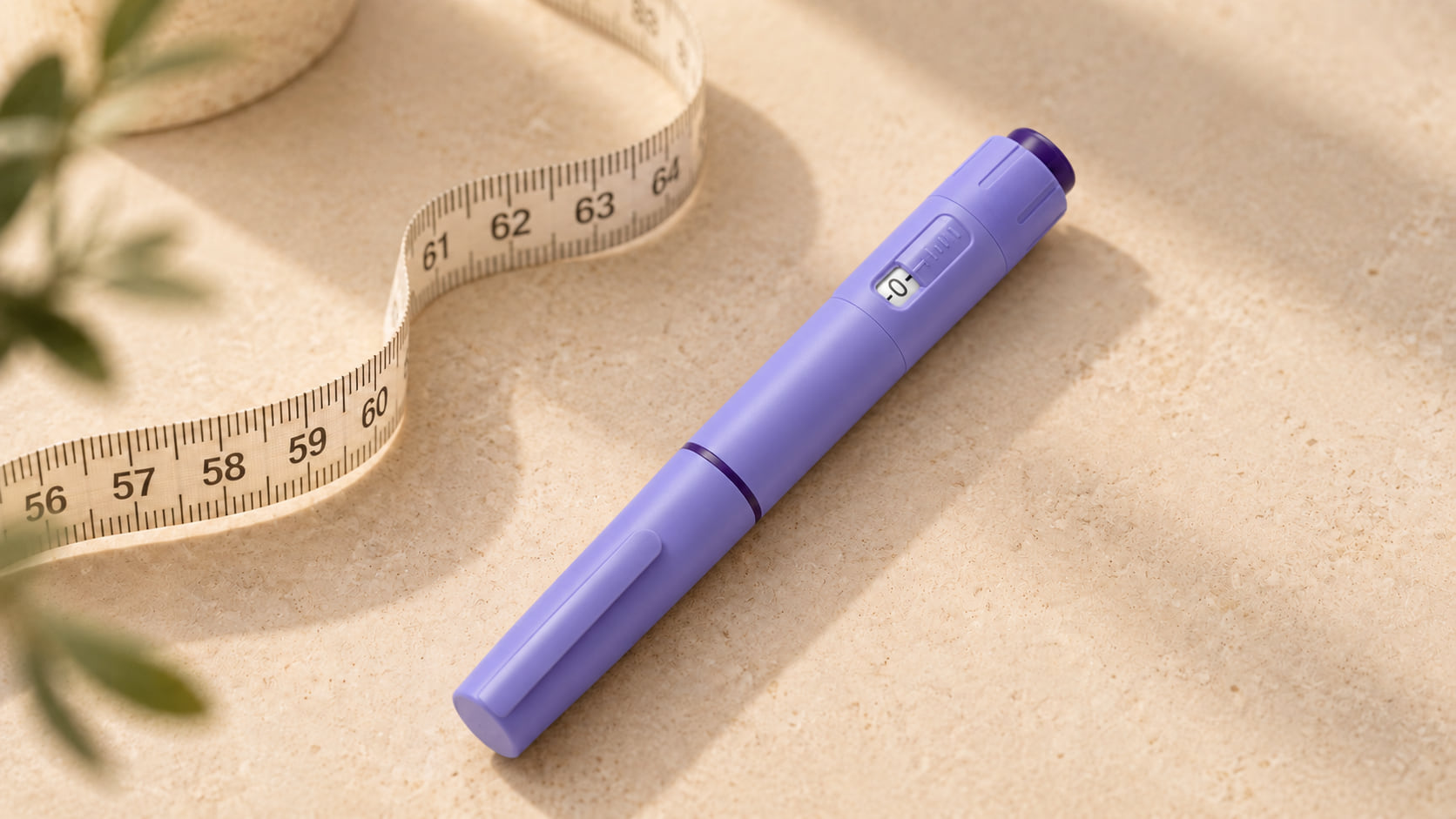
How much weight you lose with Saxenda varies from person to person; the research gives a range, not a promise. In the SCALE trial (New England Journal of Medicine, 2015), 3,731 adults with overweight or obesity without diabetes received liraglutide 3.0 mg or a placebo for 56 weeks, alongside lifestyle support. The liraglutide group lost an average of 8.4 kilos, the placebo group 2.8 kilos. At least 5% weight loss was achieved by 63.2% of liraglutide users, compared with 27.1% on placebo; more than 10% by 33.1% compared with 10.6%.
The European Medicines Agency (EMA) summarises five trials with more than 5,800 adults: on the highest dose an average of 7.5% weight loss, compared with 2.3% on placebo. For someone weighing 100 kilos, that is roughly 7 to 8 kilos in just over a year, as an average. Some participants lost considerably more, some less.
The course is the same for most users: less hunger within 1 to 2 weeks, clear weight loss from the maintenance dose onwards, and levelling off after a few months. After 12 weeks on 3.0 mg the doctor assesses the result; according to the registration, treatment stops if you have lost less than 5% of your starting weight by then. The course per phase is in our article how much weight you lose with Saxenda, and what users report in practice is in Saxenda reviews.
Two things belong in a realistic picture. Saxenda only works well alongside fewer calories and more exercise; a practical example is in our article on a Saxenda diet example. And if you stop the medicine, your appetite returns and many people regain weight. If you are not getting results, read Saxenda no longer working; if you want to stop responsibly, the approach is in our article on tapering off Saxenda.
Tried everything and want to lose weight with a doctor's support? Your own BIG-registered doctor (the BIG register is the Dutch register of healthcare professionals) assesses whether medical weight loss is right for you and follows up with you every 4 weeks. medical weight loss with injections →
What does Saxenda cost and is it covered?
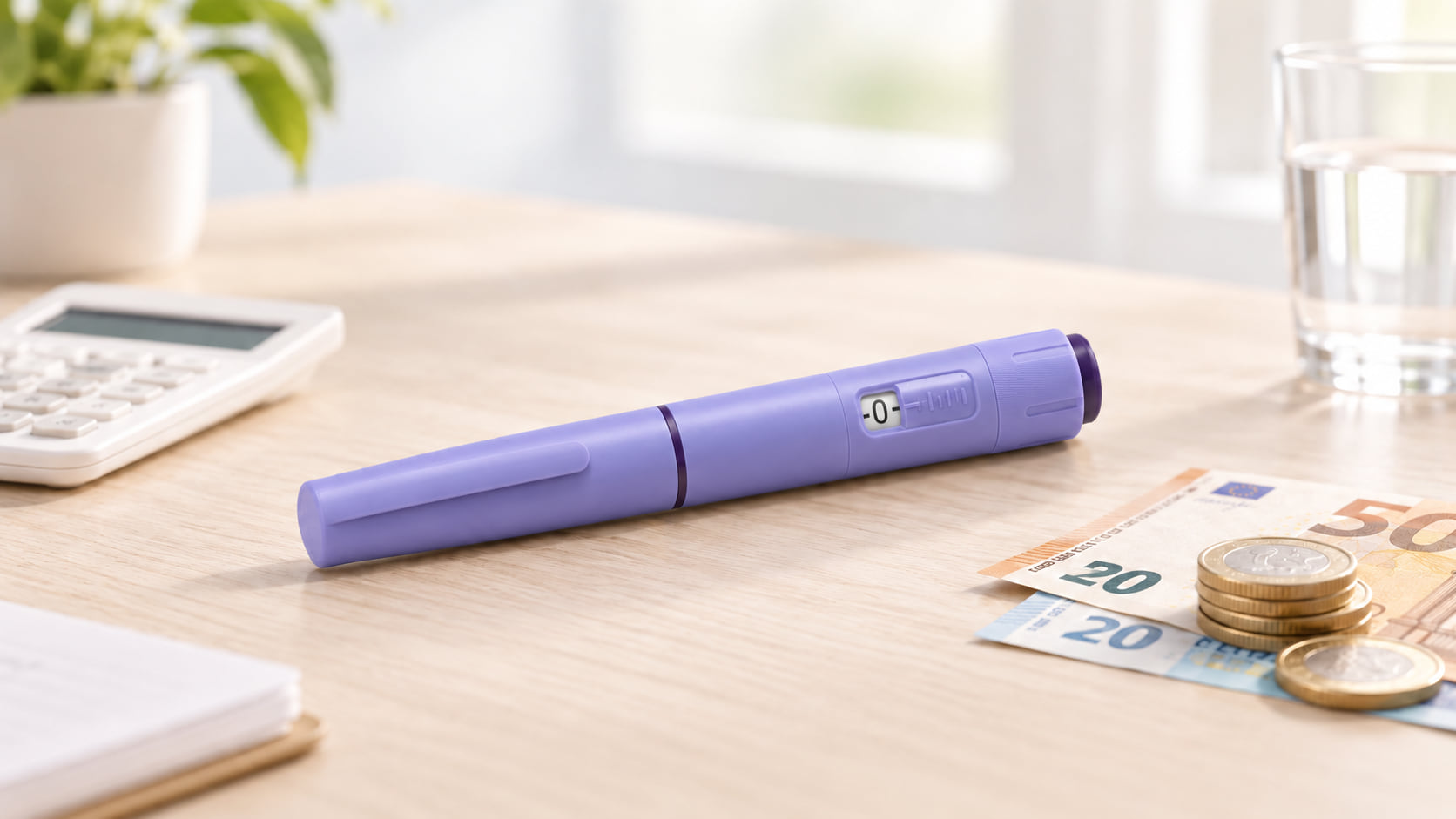
One Saxenda pen costs €37.13 at the pharmacy and a pack of 5 pens €185.63 (medicijnkosten.nl, reference date 1 September 2026), excluding the pharmacy dispensing fee (terhandstellingskosten). On the maintenance dose of 3.0 mg you use 5 pens per month, so roughly €186 in medication. During the build-up weeks you need fewer pens. The calculation per dose, including pharmacy and doctor's costs, is in our article on Saxenda costs.
Saxenda is the only weight loss medicine with a GLP-1 action that is covered by basic health insurance, but only for a small group. According to Zorginstituut Nederland, reimbursement has applied since 1 April 2022 under these conditions:
- BMI of 40 or higher, or a BMI of 35 or higher with cardiovascular disease, sleep apnoea or osteoarthritis.
- At least one year of a recognised combined lifestyle intervention (GLI, gecombineerde leefstijlinterventie, a Dutch lifestyle programme) completed without sufficient results, and you continue the GLI alongside the medication.
- No type 2 diabetes and no stomach reduction surgery in the past or planned.
- A doctor's statement from the prescribing doctor, which the pharmacy checks. Your deductible (eigen risico) applies.
- Stopping rule: if after 3 months on the maintenance dose you have lost less than 5% of your starting weight, reimbursement stops.
The conditions are national and the same with every insurer. What differs is the brand: since the end of 2025, insurers designate a preferred brand with the same active ingredient, such as Vobexoryn or Nevolat, and then do not cover the Saxenda brand itself. The rules per insurer are in our article on Saxenda insurance coverage; which other medicines are or are not covered is covered in weight loss medication covered by insurance.
Buying Saxenda: only through a doctor, prescription and pharmacy
Saxenda is a prescription medicine. In the Netherlands you can only get it legally through a doctor who writes a prescription and a registered pharmacy that supplies it. That can be through your GP (huisarts) or through an online clinic where a doctor assesses your situation; with an online clinic, the pen is usually delivered to your home by a Dutch pharmacy.
Webshops offering Saxenda without a prescription, Marktplaats (the Dutch classifieds site) ads and foreign sellers of "liraglutide peptides" fall outside that chain. You then do not know what is in the pen, how it has been stored or whether the dose is correct, and there is no doctor to deal with side effects. The full route, the needles you need and the question of what your GP does and does not do are covered in our article on buying Saxenda and in weight loss medication from your GP.
Saxenda and the other liraglutide brands
Saxenda is not the only brand with liraglutide. Since the patent expired, Vobexoryn, Nevolat and Byesilor have also been registered for weight management in the Netherlands, with the same strength (6 mg/ml, 18 mg per pen) and the same dosing schedule. Victoza, Diavic and Diavorin also contain liraglutide, but are registered for type 2 diabetes with a maximum dose of 1.8 mg per day.
If the pharmacy gives you a different pen from Saxenda, this is usually due to your insurer's preferred-brand policy or a shortage. For example, VGZ has designated Vobexoryn since 1 October 2025 and Zilveren Kruis covers Nevolat from 1 April 2026. The active ingredient and the dose are the same; the pen works differently per manufacturer. If your brand changes, ask the pharmacy to explain the new pen. All brands side by side, with the differences in pen and registration, are in our article on liraglutide.
Saxenda compared with Ozempic, Wegovy, Mounjaro and Mysimba
Saxenda is the oldest and the only daily injection in the line-up; you inject the newer GLP-1 medicines weekly and in research they lead to more weight loss on average. Mysimba is a tablet with a different mechanism. This is how the five compare (as of September 2026):
| Saxenda | Ozempic | Wegovy | Mounjaro | Mysimba | |
|---|---|---|---|---|---|
| Active ingredient | Liraglutide | Semaglutide | Semaglutide | Tirzepatide | Naltrexone/bupropion |
| Mechanism | GLP-1 | GLP-1 | GLP-1 | GLP-1 and GIP | On appetite and reward in the brain |
| Administration | Injection, daily | Injection, weekly | Injection, weekly | Injection, weekly | Tablet, daily |
| Registered for weight management | Yes (2015) | No, for type 2 diabetes (off-label for weight loss) | Yes (2022) | Yes (2024) | Yes (2015) |
| Basic insurance coverage for weight loss | Under conditions (BMI 35 or 40, after one year of GLI) | No | No | No | Under conditions (BMI 27 or 30, after one year of GLI) |
In the only head-to-head comparison, the STEP 8 trial (JAMA, 2022), participants lost an average of 15.8% after 68 weeks with weekly semaglutide 2.4 mg and 6.4% with daily liraglutide 3.0 mg. For tirzepatide, the SURMOUNT-1 trial (NEJM, 2022) reports an average of 15% to 21% after 72 weeks, depending on the dose. For Mysimba, the EMA reports an average of 3.7% to 5.7%. These are averages from research; how you respond and which side effects you get differs per medicine and per person.
Saxenda can be a good fit precisely when the weekly medicines are not medically suitable, when you meet the reimbursement conditions, or when your body responds well to liraglutide. The considerations per pair are in our articles Saxenda vs Ozempic, Wegovy vs Saxenda, Saxenda vs Mounjaro and Mysimba vs Saxenda. You will find the background on each medicine on our pages about Ozempic, Wegovy and Mounjaro.
How medical weight loss with injections works at Qlinic
At Qlinic you are supported by your own BIG-registered doctor, who follows you from intake to the end. The medical weight loss with injections programme runs in three steps: a consultation in which the doctor assesses whether medical weight loss is right for you and which medicine fits, the prescription with home delivery through a registered Dutch pharmacy, and a follow-up with the same doctor every 4 weeks. If you have side effects or questions, you have direct contact with your own doctor. You can always pause or stop, in consultation with your doctor.
A programme with liraglutide (Saxenda) costs €850 per month, plus a one-off €400 supervision fee. This includes the medication, home delivery and supervision. Which medicine suits your situation is decided by the doctor together with you; that may also be a different GLP-1 medicine.
Want to know whether medical weight loss is right for you? Take the short check and the doctor will assess your situation. eligibility check →
Frequently asked questions about Saxenda
How many kilos do you lose with Saxenda?
That varies from person to person. In the SCALE trial, participants lost an average of 8.4 kilos in 56 weeks with liraglutide 3.0 mg, compared with 2.8 kilos on placebo; across five trials, the EMA reports an average of 7.5%. Just over a third of users lost more than 10%, some lost little.
Is Saxenda the same as Ozempic?
No. Saxenda contains liraglutide and you inject it daily; Ozempic contains semaglutide and you inject it weekly. Both are GLP-1 medicines, but Saxenda is registered for weight management and Ozempic for type 2 diabetes.
Which is better, Saxenda or Ozempic?
In research, semaglutide leads to more weight loss on average than liraglutide: 15.8% compared with 6.4% in the STEP 8 trial with the Wegovy dose. However, Saxenda is the only one of the two that is registered for weight loss and covered under conditions. Which medicine is medically right for you is assessed by the doctor.
What are the downsides of Saxenda?
You inject every day, many users notice the gastrointestinal complaints during the build-up phase, the average weight loss is lower than with the weekly medicines, and without reimbursement you pay roughly €186 per month for medication. After stopping, the weight often returns if your eating pattern has not changed.
What does one Saxenda pen cost?
One pen costs €37.13 at the pharmacy and a pack of 5 pens €185.63 (medicijnkosten.nl, 1 September 2026), excluding the dispensing fee. On the maintenance dose of 3.0 mg per day you use 5 pens per month.
Who is Saxenda intended for?
Saxenda is registered for adults with a BMI of 30 or higher, or 27 to 30 with a weight-related condition. Whether it suits your situation is assessed by the doctor based on your health and the medicines you use. Reimbursement only applies with a BMI of 35 or 40 after one year of GLI.
Is Saxenda also available as a pill?
No, Saxenda is only available as an injection pen. If you would rather not inject, you can discuss a tablet with the doctor, such as Rybelsus (semaglutide) or Mysimba. How that works with us is covered on the page about medical weight loss with pills.
How long can you use Saxenda?
There is no fixed maximum duration of use. After 12 weeks on 3.0 mg the doctor assesses whether the medicine is working well enough; with less than 5% weight loss, treatment stops according to the registration. After that, you and the doctor decide together how long you continue and how you taper off.
Medical weight loss with injections at Qlinic
Your own doctor assesses which medication suits you, in English or Dutch. If it is suitable, the prescription goes straight to a registered Dutch pharmacy and you are in touch with the same doctor every four weeks.
Sources
- Farmacotherapeutisch Kompas, consulted at the time of publication.
- SCALE trial, consulted at the time of publication.
- European Medicines Agency (EMA), consulted at the time of publication.
- Zorginstituut Nederland, consulted at the time of publication.
Responsible for this information: Qlinic B.V., Markenhaven 25A, Amersfoort. Last updated: 23 September 2026.
All articles about Saxenda
13 articles, written and medically reviewed by the Qlinic doctors. Choose a topic or search for a word.
13 articles found



Further reading

Saxenda · 11 min
Liraglutide: Saxenda, Vobexoryn, Nevolat, Diavic and Byesilor compared
By Nazanin Ahmadi Mozafari, doctor
Saxenda · 9 min
Is Saxenda covered by insurance? The conditions per insurer in 2026
By Nazanin Ahmadi Mozafari, doctor
Saxenda · 10 min
Saxenda diet: what to eat and avoid, with a sample day
By Nazanin Ahmadi Mozafari, doctor