Mounjaro9 min read18 September 2026
Tirzepatide: the active substance in Mounjaro
You are reading about Mounjaro and come across the name tirzepatide. What exactly is it, is it the same as Ozempic and can you lose weight with it?
 By Nazanin Ahmadi Mozafari
 Medically reviewed by Nagita Grover-Khatri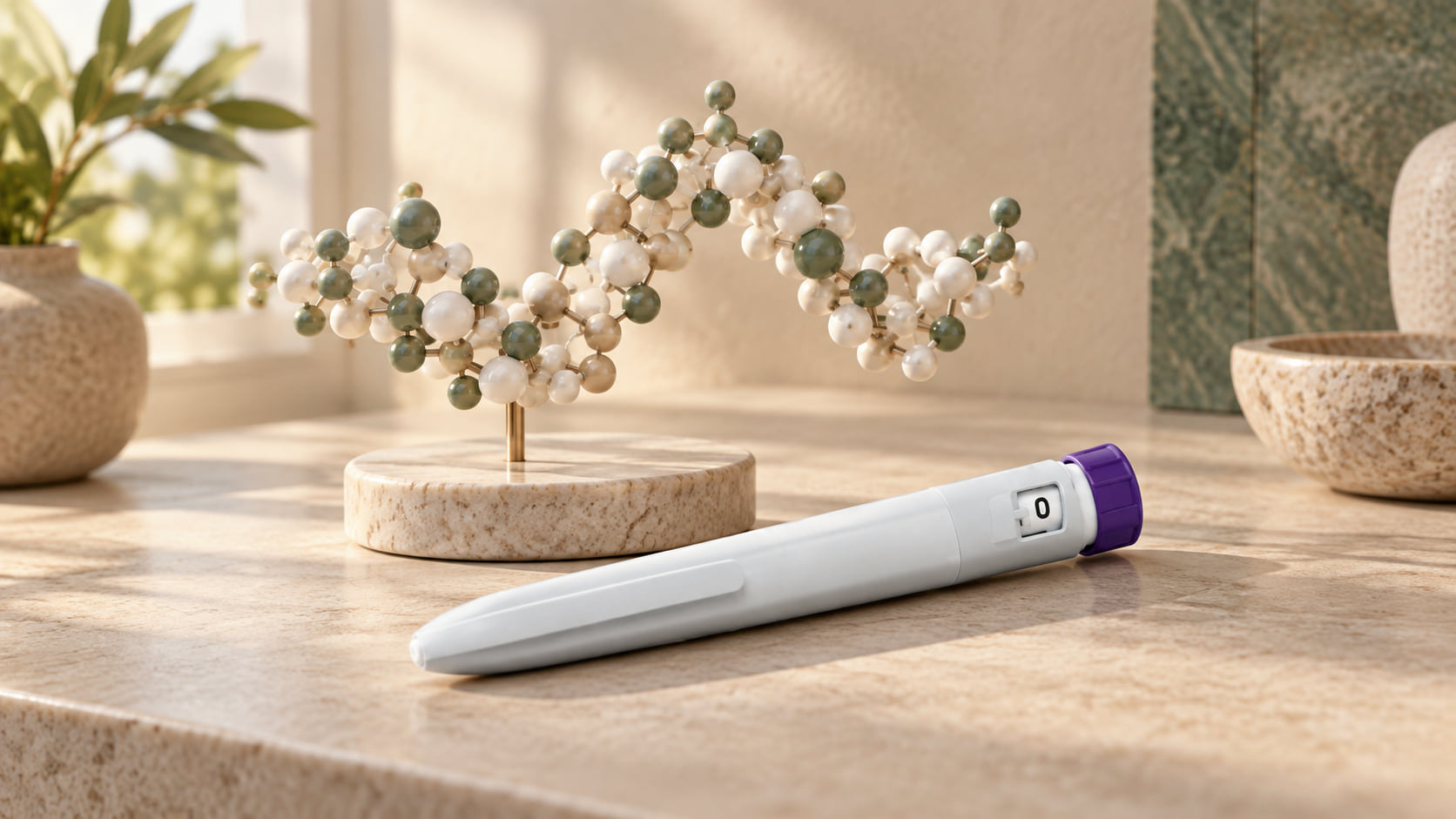
What is tirzepatide?
Tirzepatide is a medicine that mimics the action of two gut hormones: GLP-1 and GIP. It suppresses appetite, slows gastric emptying and improves blood sugar. Tirzepatide is the active substance in Mounjaro, an injection you give under the skin once a week. It is only available on prescription. You can also compare Mounjaro vs Wegovy.
Tirzepatide is found only in Mounjaro; there are no other brands containing this substance. The manufacturer is Eli Lilly. According to the European Medicines Agency (EMA), Mounjaro has been approved in the EU since 15 September 2022 for type 2 diabetes and for weight management in adults with a BMI of 30 or higher, or of 27 to 30 with a weight-related condition. You can also compare Mounjaro vs Saxenda.
How tirzepatide works: GLP-1 and GIP
Tirzepatide acts on two hormone receptors at the same time, whereas older medicines such as semaglutide and liraglutide act on one receptor. That dual mechanism explains why it showed a greater effect on weight in research.
- GLP-1: activates the satiety centre in the brain, slows gastric emptying and, after a meal, leads to more insulin and less glucagon. You feel full sooner and your blood sugar becomes more stable.
- GIP: boosts insulin release after eating and appears to improve the sensitivity of fat tissue to insulin. Combined with GLP-1, it strengthens appetite suppression and may reduce nausea.
Tirzepatide is designed to stay active for about a week. That is why one injection a week is enough, on a fixed day of your choice. You start on 2.5 mg and the doctor increases the dose in steps of 2.5 mg, with at least 4 weeks in between, up to a maximum of 15 mg per week. Read more about the Mounjaro golden dose.
Tirzepatide, Mounjaro and Ozempic: what is what?
Tirzepatide is not the same as Ozempic. Ozempic contains semaglutide, a substance that mimics only GLP-1. Tirzepatide mimics both GLP-1 and GIP. Mounjaro is the brand name of tirzepatide; Ozempic and Wegovy are brand names of semaglutide.
| Tirzepatide | Semaglutide | |
|---|---|---|
| Brand | Mounjaro | Ozempic, Wegovy (injection), Rybelsus (tablet) |
| Acts on | GLP-1 and GIP | GLP-1 |
| Administration | injection, once a week | injection once a week or tablet once a day |
| Strengths | 2.5 to 15 mg (KwikPen, 6 strengths) | Ozempic 0.25 to 2 mg; Wegovy up to 2.4 mg |
| Registered for | type 2 diabetes; weight management (BMI 30, or 27 with a condition) | Ozempic and Rybelsus: type 2 diabetes; Wegovy: weight management |
| Reimbursement | for type 2 diabetes under conditions; not for weight loss | Ozempic and Rybelsus for type 2 diabetes under conditions; Wegovy not |
| In the EU since | 2022 | 2018 (Ozempic), 2022 (Wegovy) |
The registrations, strengths and conditions are in the tirzepatide product text of the Farmacotherapeutisch Kompas (the Dutch national reference for medicines) of Zorginstituut Nederland (the Dutch National Health Care Institute), consulted September 2026. Which medicine suits you better is a medical decision; the comparison is in our article Mounjaro vs Ozempic.
Tirzepatide and weight loss: what the research shows
You can lose weight with tirzepatide, and the effect has been measured in large studies. In the SURMOUNT-1 trial (NEJM, 2022), 2,539 adults with obesity, without diabetes, received 5, 10 or 15 mg of tirzepatide or a placebo weekly for 72 weeks, alongside lifestyle support. The tirzepatide groups lost an average of 15 to 21% of their body weight, depending on the dose; the placebo group 3.1%. Read more about the Mounjaro diet.
The first direct comparison with semaglutide came in 2025. In the SURMOUNT-5 trial (NEJM, 2025), participants with obesity lost more weight on average after 72 weeks with tirzepatide than with semaglutide, and fewer participants stopped because of gastrointestinal complaints.
These are averages from controlled research. How much weight you lose varies from person to person and depends on your dose, your starting weight, your diet, your exercise and whether you keep up the treatment. You usually notice the effect on hunger in the first weeks; your weight follows gradually. You can read more about the pace in our article how fast does Mounjaro work.
Tried everything and still struggling to lose weight? Your own BIG-registered doctor (the BIG register is the Dutch register of healthcare professionals) assesses whether medical weight loss suits you and supports you personally. Medical weight loss with injections →
Is there a tirzepatide tablet or oral form?
No. A tablet or other oral form of tirzepatide is not registered, not in the Netherlands and not elsewhere in the EU. Tirzepatide only exists as an injection. Products offered online as "tirzepatide pills" or "oral tirzepatide" are not a registered medicine and fall outside any supervision.
The manufacturer and other companies are working on tablets with other active substances that act on the same hormones. What is coming and what already exists is covered in our article on new weight loss drugs. Whether a tablet suits your situation is for the doctor to assess.
Side effects and downsides of tirzepatide
The most common side effects of tirzepatide are nausea, vomiting, diarrhoea, constipation, abdominal pain, reduced appetite and tiredness. They occur in more than 1 in 10 users, especially in the weeks after a dose increase, and usually ease after that.
Less common side effects are burping, a bloated feeling, heartburn, dizziness, low blood pressure, hair loss and reactions at the injection site. Rare but serious are gallstones and inflammation of the pancreas (pancreatitis); if you have severe, persistent abdominal pain, contact the doctor immediately. If you use tirzepatide alongside insulin or a sulphonylurea, your blood sugar can become too low.
You do not use tirzepatide during pregnancy or if you want to become pregnant. The doctor also assesses extra carefully if you have had pancreatitis before or have serious kidney or liver problems. The full overview is in our article on Mounjaro side effects; how the dosing schedule limits side effects is in our article on Mounjaro dosage.
Is tirzepatide available in the Netherlands and how do you get it?
Yes, tirzepatide is available in the Netherlands as Mounjaro, only on prescription through a registered pharmacy. A doctor first assesses whether the medicine suits you: your BMI, your health, your other medicines and factors such as wanting to become pregnant. The formal threshold for weight management is a BMI of 30 or higher, or of 27 with a weight-related condition.
Can a GP (huisarts) prescribe Mounjaro? Yes, they can. They do so for type 2 diabetes; for overweight without diabetes, GPs are cautious and usually refer you to a lifestyle programme first. How that works is explained in our article can my GP prescribe weight loss injections.
The pharmacy supplies Mounjaro as a KwikPen with four weekly doses; how to use and store it is in our article on the Mounjaro pen. Offers without a prescription, through webshops, Marktplaats (the Dutch classifieds website) or "tirzepatide peptide" sellers, are illegal and regularly counterfeit. The safe route is in our article on how to buy Mounjaro.
What does Mounjaro cost and is tirzepatide reimbursed?
For weight loss, you pay for Mounjaro yourself. The pharmacy price per 4-week pen ranges from €176.57 (2.5 mg) through €245.53 (5 mg) to €343.42 (7.5 mg and 10 mg), according to medicijnkosten.nl of Zorginstituut Nederland (reference date 1 September 2026), excluding pharmacy dispensing fees (terhandstellingskosten). All strengths and the total programme costs are in our article on the Mounjaro price.
Reimbursement from basic health insurance (basisverzekering) only applies to type 2 diabetes, under conditions. For obesity, Zorginstituut Nederland is assessing tirzepatide in 2026 using a stepped approach: first for people with the highest burden of disease (BMI 30 or higher with a weight-related condition, or BMI 35 or higher), after they have followed a lifestyle programme. Until there is a positive decision, there is no reimbursement for weight loss. The current status is in our article on whether Mounjaro is covered by insurance.
At Qlinic, a programme with tirzepatide (Mounjaro) costs €350 per month, plus a one-off €400 support fee. This includes the prescription, home delivery through a registered Dutch pharmacy and support from your own BIG-registered doctor, with a follow-up every 4 weeks. How the programme is structured is on the page medical weight loss with injections.
Want to know whether medical weight loss could be right for you? Take the short check, and the doctor will assess your situation. Eligibility check →
Frequently asked questions about tirzepatide
Is tirzepatide the same as Ozempic?
No. Ozempic contains semaglutide, which mimics only GLP-1. Tirzepatide mimics both GLP-1 and GIP and is found only in Mounjaro.
Is tirzepatide the same as Mounjaro?
Yes. Tirzepatide is the active substance, Mounjaro the brand name. There are no other brands containing tirzepatide.
What does tirzepatide do to your body?
It suppresses your appetite via the satiety centre, slows your gastric emptying and increases insulin release after a meal. As a result, you eat less and your blood sugar becomes more stable.
Is tirzepatide available in the Netherlands?
Yes, as Mounjaro, only on a doctor's prescription and through a registered pharmacy. A tablet containing tirzepatide does not exist.
How do I get tirzepatide?
Through a doctor who assesses whether the medicine suits you and writes a prescription, after which a registered Dutch pharmacy supplies it. Offers without a prescription are illegal and often counterfeit.
How much does Mounjaro cost?
The pharmacy price per 4-week pen is between €176.57 and €343.42, depending on the strength (medicijnkosten.nl, 1 September 2026). At Qlinic, a programme with tirzepatide (Mounjaro) costs €350 per month, plus a one-off €400 support fee.
What are the downsides of tirzepatide?
Mainly gastrointestinal complaints during the build-up, weekly injections, the costs and the chance that your weight comes back after stopping. Gallstones and pancreatitis are rare.
<!-- klant:eind -->Responsible for this information: Qlinic B.V., Markenhaven 25A, Amersfoort. Published: 18 September 2026. This article is general information and does not replace personal medical advice.
About the author
Nazanin Ahmadi Mozafari
Doctor · BIG 59925559301
Guides you from intake to follow-up and knows your file, no changing faces.
More about Nazanin Ahmadi Mozafari
Further reading

Mounjaro · 10 min
Mounjaro diet plan: what to eat and what to avoid, with a daily menu and recipes
By Nazanin Ahmadi Mozafari, doctor
Mounjaro · 15 min
Mounjaro side effects: what to expect (and what you can do)
By Nazanin Ahmadi Mozafari, doctor
Mounjaro · 9 min
How fast does Mounjaro work and how much weight do you lose?
By Nazanin Ahmadi Mozafari, doctor