
Ozempic8 min read1 September 2026
Ozempic and exercise: is it allowed, what does it do to your muscles and how do you train smart?
You use Ozempic or are about to start, and you want to keep exercising, or to start. At the same time you read about muscle loss, tiredness and nausea. How do you combine these sensibly?
 By Nagita Grover-Khatri
 Medically reviewed by Nazanin Ahmadi Mozafari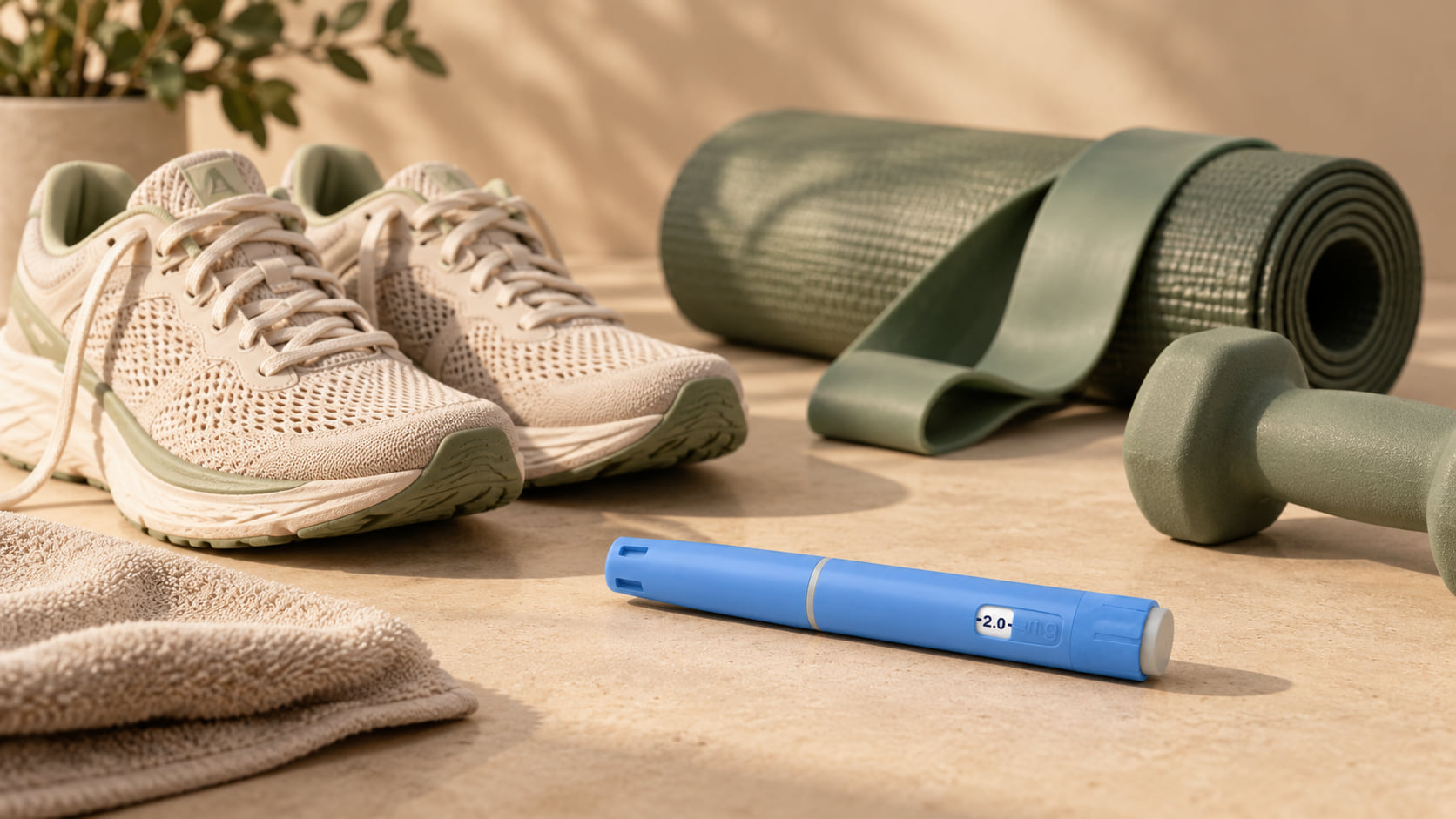
Can you exercise on Ozempic?
Yes, you can exercise on Ozempic and it is wise to do so. Exercise helps maintain muscle mass, improves blood sugar and helps you keep the weight off after treatment. In the weeks after a dose increase, you adjust the intensity if you feel sick or tired. If you feel dizzy, vomit or show signs of dehydration, do not exercise and consult the doctor. Read more about Ozempic teeth problems. Read more about Ozempic.
What does Ozempic do to your muscles?
Ozempic itself does not break down muscle, but losing weight quickly by eating less always costs some muscle mass if you do nothing to prevent it. With any substantial weight loss, part of the lost kilos consists of fat-free mass, including muscle. Semaglutide does not directly increase this, but it makes you eat less, and therefore also take in less protein.
Less muscle mass means a lower resting metabolism, less strength and less stability. You want to prevent that, and you can: in research, strength training plus enough protein are the two factors that most strongly influence muscle preservation during weight loss. People who only lose weight without training lose more muscle than people who do strength training twice a week.
Strength training or cardio: what works best alongside Ozempic?
Strength training is the foundation, cardio the addition. Strength training protects your muscles; cardio improves fitness, heart and blood vessels and uses extra energy. The physical activity guidelines of the Gezondheidsraad (the Health Council of the Netherlands) advise adults to do at least 2.5 hours of moderate-intensity activity per week plus muscle- and bone-strengthening activities at least twice a week. That is a good starting point during a weight loss programme.
| Stage | Strength training | Cardio | What to watch out for |
|---|---|---|---|
| Build-up phase (first weeks after each increase) | twice a week, light to moderate, large muscle groups | walking or cycling, 20 to 30 minutes | nausea, tiredness; do not exercise on an empty stomach if you get dizzy |
| Stable phase (dose is fixed) | 2 to 3 times a week, gradually heavier weights | 2 to 3 times a week, 30 to 45 minutes | keep protein and fluids up; strength training can be heavier |
| Maintenance and tapering off | 2 to 3 times a week | daily activity plus twice a week more intensive | keep the routine going, even when your weight is stable |
For women around menopause, strength training is especially important, because muscle and bone loss then happen faster; read our article on strength training during menopause.
Exercising during the build-up phase: dealing with nausea and tiredness
In the build-up phase of Ozempic, nausea, tiredness and a full feeling are the complaints that make exercise difficult. They usually peak in the days after the injection and after a dose increase, and decrease afterwards.
In practice:
- Do not plan heavy workouts for the day after the injection, but later in the week when the complaints are milder.
- Train lightly if you feel sick: a walk or a gentle bike ride often actually helps against nausea.
- Eat something small and protein-rich 1 to 2 hours before exercising rather than a large meal, which stays in your stomach longer because of the slower gastric emptying.
- Skip a workout if you are vomiting, have diarrhoea or feel dizzy, and drink extra.
How the dosage is built up is in our article on Ozempic dosage; the overview of the complaints is in our article on Ozempic side effects.
Protein, food and drink: training without fuel does not work
If you exercise on Ozempic, you need more protein and fluid than your reduced appetite will naturally give you. The Voedingscentrum (the Netherlands Nutrition Centre) uses 0.83 grams of protein per kilo of body weight per day for healthy adults and states that enough protein during weight loss helps preserve muscle tissue. For weight loss combined with strength training, doctors and dietitians often advise more; discuss the amount that suits you with your doctor.
How to get enough despite less hunger:
- Start every meal with the protein: chicken, fish, eggs, quark, pulses, tofu.
- Spread protein over 3 to 4 eating moments instead of one large meal.
- Drink water throughout the day, even when you are not thirsty; nausea and diarrhoea increase the risk of dehydration.
- Do not skip meals to lose weight "faster": eating too little costs muscle, not fat.
A practical example of a daily menu is in our article on an Ozempic diet plan; how much energy you need can be worked out with the tool calculate your calorie needs.
Would you like to lose weight with a doctor who also looks at your muscles and your diet? Your own BIG-registered doctor (the BIG register is the Dutch register of healthcare professionals) assesses whether medical weight loss suits you and guides you through dosage, side effects and lifestyle. Medical weight loss with injections →
What should you not do on Ozempic when you exercise?
There are five things to avoid when you exercise on Ozempic: training intensively on an empty stomach, drinking too little, alcohol around exercise, carrying on despite warning signs and increasing the dosage yourself. Read more about Ozempic eyes.
- Do not exercise intensively on an empty stomach if you get dizzy or light-headed; eat something small beforehand.
- Do not drink too little: Ozempic also suppresses thirst, while you lose extra fluid through sweating and any diarrhoea.
- No alcohol around your workout: it worsens nausea and dehydration; read our article on Ozempic and alcohol.
- Do not carry on despite warning signs: severe abdominal pain, persistent vomiting, palpitations or fainting are reasons to stop and call the doctor.
- Never increase the dosage yourself to get results faster.
If you use Ozempic for type 2 diabetes alongside insulin or a sulphonylurea, your blood sugar can drop too low during exercise. Take fast-acting carbohydrates with you and discuss the dosage with the doctor; more in our article on diabetes medication for weight loss.
Do you need to exercise intensively for Ozempic to work?
No, Ozempic also works without intensive exercise; it suppresses appetite regardless of your training. But the result is better and more lasting with exercise. A study in The New England Journal of Medicine (2021) followed adults with obesity for a year after a diet: the combination of GLP-1 medication (liraglutide) with moderate to vigorous exercise maintained weight loss better than medication alone or exercise alone, and reduced body fat percentage more.
Moderate intensity means: walking at a brisk pace, cycling, swimming, a workout during which you can still talk but not sing. That is achievable for almost everyone, even without a gym.
How quickly do you lose weight with Ozempic and exercise?
The pace varies from person to person and a fixed number of kilos per week cannot be promised. With exercise added, you mainly lose more fat and less muscle, and that matters more than the number on the scales: muscle adds weight, but keeps your metabolism and your strength up.
Ozempic is registered for type 2 diabetes; its use for weight loss is off-label and is assessed by the doctor. How the effect develops over time is in our article how fast does Ozempic work. What is realistic with a goal of 10 kilos is in our article on how to lose 10 kg.
Would you like to know whether medical weight loss is right for you? Take the short check and the doctor will assess your situation. Eligibility check →
Frequently asked questions about Ozempic and exercise
What does Ozempic do to your muscles?
Ozempic itself does not break down muscle, but losing weight quickly with less protein costs muscle mass. Strength training twice a week and enough protein limit that loss.
What should you not do on Ozempic?
Do not increase the dosage yourself, do not use it during pregnancy or if you want to become pregnant, and around exercise: no alcohol, no intensive training on an empty stomach and do not drink too little.
How quickly do you lose 10 kilos with Ozempic?
That varies from person to person and cannot be predicted. With strength training and enough protein you mainly lose fat and hold on to muscle; that is healthier than losing weight quickly. You can determine your starting point with the tool calculate your BMI.
Can I run or train intensively on Ozempic?
Yes, once your dose is stable and you have few side effects. In the build-up phase you train more lightly, eat something small beforehand and drink extra.
How much protein do I need if I exercise on Ozempic?
The Voedingscentrum uses 0.83 grams per kilo of body weight for healthy adults; for weight loss with strength training, doctors and dietitians often advise more. Discuss the amount that suits you with your doctor.
<!-- klant:eind -->Responsible for this information: Qlinic B.V., Markenhaven 25A, Amersfoort. Published: 1 September 2026. This article is general information and does not replace personal medical advice.
About the author
Nagita Grover-Khatri
Doctor · BIG 39912467601
Focuses on medical programmes for overweight, with attention to the person behind the numbers.
More about Nagita Grover-Khatri
Further reading
Ozempic · 9 min
How fast does Ozempic work? What you notice week by week
By Nazanin Ahmadi Mozafari, doctor
Weight loss medication · 12 min
Diabetes medication for weight loss: how does it work?
By Nazanin Ahmadi Mozafari, doctor
Ozempic · 12 min
Ozempic diet: what should you eat and avoid?
By Nazanin Ahmadi Mozafari, doctor