Ozempic7 min read6 August 2026
Ozempic face and other lesser-known side effects
The kilos are finally coming off, but your face is looking older. More and more people losing weight with Ozempic recognise this: hollow cheeks, a tired look and skin that feels looser. This phenomenon is called Ozempic face.
 By Nagita Grover-Khatri
 Medically reviewed by Nazanin Ahmadi Mozafari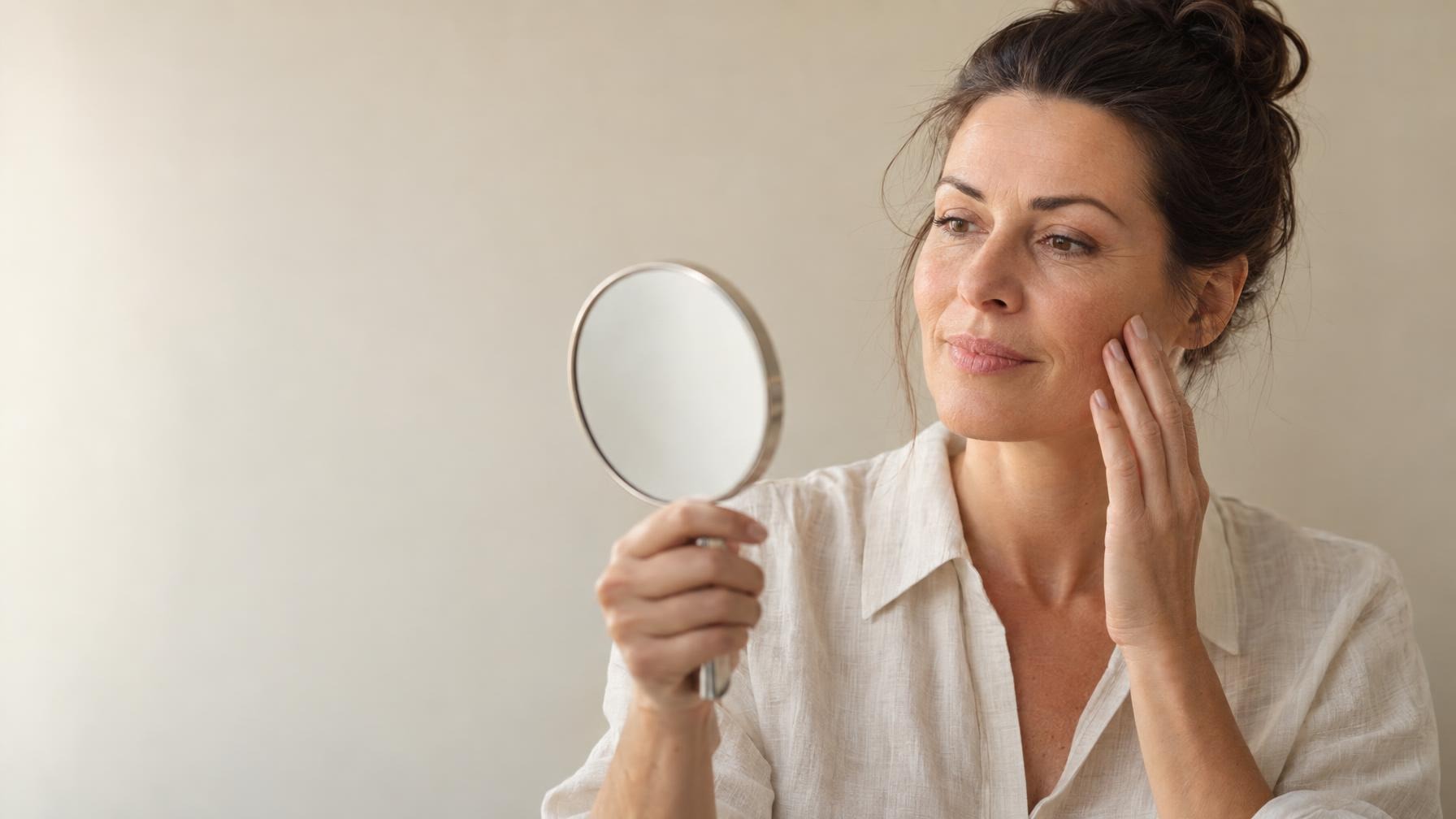
What is Ozempic face?
Ozempic face is a hollow, older-looking face that can develop after rapid weight loss with weight loss medication such as Ozempic (semaglutide). Because the face loses a lot of fat volume in a short time, the skin does not get enough time to shrink along with it. It is not an official side effect of the medicine itself.
The term comes from the United States, where the appearance of celebrities who had lost weight quickly attracted a lot of media attention. Important to know: the same effect occurs with any form of rapid weight loss, whether from a crash diet, a gastric bypass or medication. The name is therefore actually misleading.
The good news: it is not a direct side effect of the medicine, but a result of rapid weight loss. And that means you can do something about it yourself. Below you can read exactly what Ozempic face is, how to reduce your chances of getting it and what is really known about other lesser-known side effects, from Ozempic teeth to your mood. Read more about how fast Ozempic works.
How do you recognise Ozempic face?
You recognise Ozempic face by the combination of volume loss and sagging skin in the face. The most commonly mentioned features:
- Hollow cheeks and temples
- Sagging skin around the jawline and neck
- More visible wrinkles, fine lines and nasolabial folds
- A tired or gaunt appearance
Whether you get it depends on your age, your skin type, how much weight you lose and above all how fast. Skin at 30 bounces back more easily than skin at 55, because the production of collagen and elastin decreases over the years. So by no means everyone who loses weight with Ozempic gets Ozempic face.
What causes Ozempic face?
The main cause is the pace of your weight loss, not the medicine. Semaglutide curbs your appetite, so you eat less and lose weight. In the process your body also burns the fat in your face, which is exactly what gives it a healthy, full appearance.
A 2025 systematic review in Aesthetic Surgery Journal Open Forum shows that the fat loss becomes most visible at the temples, cheeks, jawline and around the eyes. The researchers conclude that the medication does not specifically break down facial fat, but makes existing skin ageing visible more quickly: there is simply less volume under skin that is already losing firmness.
The faster you lose weight, the less time your skin has to adapt. That is exactly why the Ozempic dosage is built up step by step and medical supervision is part of it.
How to reduce your chances of getting Ozempic face
Prevention works better than repair. Four things make the difference:
- Lose weight gradually. A pace of 0.5 to 1 kilo per week gives your skin time to adapt. A doctor who monitors your pace and dose is not a luxury here but the core of the solution.
- Eat enough protein. Protein is the building material for muscles and for collagen, the supporting tissue of your skin. When you eat less, your protein intake quickly falls short.
- Keep doing strength training. Maintaining muscle mass prevents your body from breaking down muscle as well as fat. During the menopause in particular this pays off twice over: also read our article on strength training for women during the menopause.
- Drink enough and look after your skin. Hydrated skin stays more resilient. Daily sun protection protects the collagen you still have.
With medical weight loss with injections through Qlinic, our own BIG-registered doctor sees you every 4 weeks. If things are going too fast, we adjust the programme before your face pays the price.
Want to lose weight without your health or your face suffering for it? At Qlinic, your own BIG-registered doctor monitors your pace, with a follow-up every 4 weeks. Take the eligibility check →
Ozempic teeth: what do we know?
Dental problems are not listed as a side effect in the official Ozempic patient information leaflet. Still, the term Ozempic teeth is appearing more and more often, and there are logical explanations for this. If you eat and drink less, you produce less saliva, and saliva protects your enamel. In addition, nausea and acid reflux, known side effects of semaglutide, can damage the enamel.
What helps: keep drinking enough, brush carefully and tell your dentist that you use semaglutide. That way early problems are spotted early. There is no reason to panic, but there is reason to stay alert.
Ozempic and your mood
The assessment by the European Medicines Agency (EMA) from April 2024 found no causal link between GLP-1 medicines and suicidal thoughts. The safety committee PRAC analysed clinical studies, reporting data and two large real-world studies and saw no reason to change the patient information leaflet.
Even so, some users notice that their mood changes. Losing weight quickly, taking in less energy and a changed relationship with food affect you. Many people actually experience calm because the constant thinking about food disappears; others feel flatter or more irritable. If you feel low or anxious, always discuss it with your doctor. Want to know more about all the risks? Read our overview of Ozempic side effects, which also answers whether Ozempic is dangerous. Read more about the Ozempic diet.
What can you do if it is already visible?
Ozempic face often partly recovers by itself once your weight stabilises. Your skin needs months to adjust to your new volume; give it that time before you consider treatments. Cosmetic options such as fillers or skin boosters can restore volume afterwards, but they are by no means always necessary. We don't sell them, so our advice is independent: start with the basics.
| Side effect | Cause | What you can do |
|---|---|---|
| Ozempic face | Rapid volume loss plus sagging skin | Slow the pace, protein, strength training |
| Dental problems | Dry mouth, nausea, acid reflux | Drink plenty, oral hygiene, inform your dentist |
| Low mood | Rapid weight loss and lower energy intake; no proven effect of the medicine (EMA) | Discuss with your doctor |
| Hair loss | Temporary reaction of the body to rapid weight loss | Protein and patience; usually recovers by itself |
| Nausea | Slowed gastric emptying | Gradual dose increase, smaller portions |
Incidentally, most reported symptoms are not unknown at all but well documented: at Bijwerkingencentrum Lareb (the Netherlands Pharmacovigilance Centre), the more than 1,000 reports about these medicines mainly concern gastrointestinal symptoms such as nausea. Lareb and the CBG (the Dutch Medicines Evaluation Board) explicitly warn against use without medical supervision; so only use Ozempic on a doctor's prescription. You can read a complete overview of all GLP-1 side effects in our separate article.
Do you recognise the doubt: you want to lose weight, but not at any cost? Our own BIG-registered doctor tailors the programme to you, and you can simply raise any side effect with a doctor. Take the eligibility check →
Frequently asked questions about Ozempic face
What does Ozempic do to your face?
Ozempic itself does nothing to your face. The rapid weight loss caused by the medicine can, however, make fat volume in your cheeks, temples and jawline disappear. The skin shrinks more slowly, which can make your face look hollow or older.
How can you tell if someone is using Ozempic?
Not reliably. A hollow face after significant weight loss can just as easily be caused by a diet, an operation or illness. The features of Ozempic face are features of rapid weight loss in general, not of the medicine.
How do you prevent Ozempic face?
By losing weight gradually under medical supervision, eating enough protein, continuing strength training and keeping your skin hydrated and protected. The pace of your weight loss is the most important lever you can pull.
How much weight do you lose after 1 month of Ozempic?
That varies per person. Most people notice the first effect after about 4 weeks, because the dose is built up step by step and the feeling of hunger gradually decreases. The exact pace depends on your dose, diet and exercise; a responsible pace is 0.5 to 1 kilo per week.
Responsible for this information: Qlinic B.V., Markenhaven 25A, Amersfoort. Published: 6 August 2026. This article is general information and does not replace personal medical advice.
About the author
Nagita Grover-Khatri
Doctor · BIG 39912467601
Focuses on medical programmes for overweight, with attention to the person behind the numbers.
More about Nagita Grover-Khatri