Menopause11 min read11 August 2026
Weight loss after 50: why it works differently and what does help
You don't eat any differently than ten years ago, but the kilos go on faster and come off more slowly. Many people in their fifties recognise that feeling: diets that used to work now do nothing. The good news: weight loss after 50 really is possible if you adapt to what is changing in your body. Here you can read why your body responds differently, what a healthy weight is after 50, which steps do work and when medical supervision makes sense.
 By Nazanin Ahmadi Mozafari
 Medically reviewed by Nagita Grover-Khatri
Can you still lose weight after 50?
Yes, you can lose weight after 50, also during and after the menopause. It goes more slowly because your muscle mass decreases and your energy needs fall. A combination of protein-rich food, smaller portions, strength training and enough sleep works best. With a BMI above 30, medical supervision can offer a solution.
Why is weight loss after 50 harder?
Weight loss after 50 is harder because of three changes: you lose muscle mass, your hormones shift and you often move less without realising it. Remarkably, your metabolism itself is less often the culprit than you might think.
A large-scale study in the journal Science, with data from more than 6,400 people, shows that your metabolism stays remarkably stable between the ages of 20 and 60. The famous "slow metabolism" therefore does not explain why the scales work against you after 50. Only after 60 does your energy expenditure gradually decrease.
So what does change? Your muscle mass slowly decreases from your thirties and that process speeds up after 50, especially if you do nothing to counter it. Muscles use energy even at rest. Less muscle mass therefore means lower energy needs, while your eating habits usually stay the same. Your body stores that difference as fat.
Then there is behaviour. After 50 you often move less intensively: work becomes more sedentary, exercise gets squeezed out and joints complain sooner. Small shifts you hardly notice, but they add up to kilos each year. Are the scales stuck while you feel you are doing everything right? Then also read our article on why you are not losing weight, which applies to so many people.
Hormones, the menopause and your weight
Hormones play a leading role after 50, especially for women. During the menopause your oestrogen level drops and that changes where your body stores fat: less on the hips and buttocks, more around the abdomen. As a result, many women develop a menopause belly, even though their eating pattern has not changed.
The figures underline how common this is. An overview study in Mayo Clinic Proceedings shows that women in midlife gain an average of about 0.7 kg per year, regardless of their starting weight. Ten years of menopause can thus add seven kilos without you noticing.
Unfortunately, belly fat is not just a matter of clothing size. Fat around the organs increases the risk of cardiovascular disease and type 2 diabetes. That is exactly why it pays to take action now, including when it comes to the last stubborn kilos. How to approach this during this stage of life is explained in our guide to losing weight during the menopause.
The hormone balance also shifts in men, just more gradually: testosterone levels fall slowly, which encourages muscle loss and belly fat. More on that below.
Does this sound familiar, and are healthy eating and more exercise no longer enough? Our own BIG-registered doctor personally assesses whether medical weight loss suits your situation. Take the eligibility check →
What is a healthy weight after 50?
After 50, a healthy weight still corresponds to a BMI between 18.5 and 25. That range does not shift with your birthday. BMI does not tell the whole story, though: muscle mass, fat distribution and waist circumference also count. Two people with the same BMI can be in very different shape.
| Height | Healthy weight (BMI 18.5 to 25) |
|---|---|
| 1.60 m | 47 to 64 kg |
| 1.65 m | 50 to 68 kg |
| 1.70 m | 53 to 72 kg |
| 1.75 m | 57 to 77 kg |
| 1.80 m | 60 to 81 kg |
| 1.85 m | 63 to 86 kg |
From a BMI of 25, doctors speak of overweight; from 30, of obesity. Want to know where you stand? Calculate your BMI in a few seconds and also measure your waist; it tells you a lot about the fat around your organs.
Note the difference between average and healthy. Many people in their fifties weigh more than the table indicates, but an average is not a health standard. Focus on your own height, waist circumference and health rather than on what is "normal" for your age group.
Weight loss after 50: a 6-step plan
This is how to tackle weight loss after 50 step by step:
- Know your starting point. Calculate your BMI, measure your waist and write down your weight. Measuring makes progress visible, especially when the kilos come off slowly.
- Eat protein at every meal. Protein protects your muscle mass and keeps you full for longer, so you are less likely to snack.
- Reduce your portions, not your nutritional value. Your energy needs are lower than in your thirties; so eat a little less, but eat complete meals.
- Train your muscles twice a week. Strength training slows muscle loss and keeps your energy expenditure up.
- Get enough sleep and limit stress and alcohol. Poor sleep and stress drive up your hunger; alcohol provides hidden calories.
- Get help if you can't manage alone. Think of your GP (huisarts), a dietitian or a lifestyle coach. Thuisarts.nl's advice on overweight (Thuisarts.nl is the Dutch GP association's patient website) is also to lose weight gradually with help, rather than quickly and alone: people who lose weight fast usually regain it just as fast.
Expect a realistic pace of about half a kilo per week. That feels slow, but it is the kind of weight loss you keep off.
A worked example makes this concrete. Say you are 55, 1.68 metres tall and weigh 92 kilos. Your BMI is then just over 32 and your healthy range lies between 52 and 71 kilos. Half a kilo a week sounds like nothing, but if you manage to keep up that pace, you will be more than ten kilos lighter after six months. Not with a crash diet, but with changes you can still sustain at 60.
Diet after 50: protein, portions and less sugar
After 50, your diet is the most powerful tool for losing weight, and the order is simple: first more protein, then smaller portions, then fewer fast-acting sugars.
Protein becomes more important as you get older. It is the building material of your muscles, and those are exactly what you want to hold on to. Spread protein-rich foods throughout the day: dairy or an egg at breakfast, pulses or fish at lunch, and chicken, meat or a vegetarian alternative at dinner.
In addition, your total intake can come down a little, because your body uses less energy than it used to. You don't need to follow a strict diet; often a quarter less on your plate is enough. Want to be more precise? You can calculate your calorie needs as a starting point.
This is what a day of eating after 50 could look like:
- Breakfast: full-fat quark or yoghurt with fruit and a handful of unsalted nuts
- Lunch: wholegrain bread with egg, cottage cheese or fish, with raw vegetables on the side
- Dinner: half a plate of vegetables, a quarter protein source (fish, chicken, pulses) and a quarter wholegrains or potatoes
- Snacks: fruit, a boiled egg or a handful of nuts instead of biscuits
See this not as a diet but as a pattern: every meal contains protein, plenty of fibre and few fast-acting sugars. That keeps you full for longer on fewer calories.
Finally, limit fast-acting sugars, soft drinks and alcohol. They provide a lot of calories and little satiety, so you soon feel hungry again. Choose fibre-rich foods such as vegetables, fruit and wholegrains; they fill you up better with fewer calories.
Exercise and maintaining muscle mass
After 50, exercise is at least as important as eating less, and strength training above all. Your muscle mass is the engine of your energy expenditure; if you only diet without training, you lose muscle as well as fat and your energy expenditure keeps dropping as a result.
The Physical Activity Guidelines of the Gezondheidsraad (the Health Council of the Netherlands) advise adults to do at least two and a half hours of moderate-intensity exercise per week, plus muscle- and bone-strengthening exercises twice a week. For people over 50, that second part is not an extra but the core: you can build muscle at any age, even if you have never trained.
Strength training doesn't have to happen in the gym. Squats, press-ups against the kitchen counter, climbing stairs with shopping: it all counts. Add daily walking or cycling, for example a short round after dinner. Consistency beats intensity.
Weight loss after 50 for men
The same principles apply to men over 50, with one clear focus: belly fat. Men mainly store excess energy around the abdomen and between the organs, precisely the fat that increases the risk of cardiovascular disease. A waist circumference above 102 centimetres is a signal to take action.
Slowly falling testosterone levels make maintaining muscle extra important. The good news: men generally respond strongly to strength training combined with a protein-rich diet, so results often become visible sooner than expected.
The biggest gains usually lie in habits: large portions, after-work drinks and taking the car for short trips. Men who skip the beer on weekdays, reduce their portions a little and train twice a week often see their waist circumference shrink within a few months.
When does medical weight loss make sense?
Medical weight loss makes sense with a BMI of 30 or higher, when healthy eating and more exercise still achieve too little after months. That is not a question of too little willpower: your body defends its old weight with persistent hunger, and after 50 your hormones don't help.
In medical weight loss, medication is combined with supervision by a doctor. GLP-1 medicines, such as semaglutide (Ozempic, Wegovy), tirzepatide (Mounjaro) and liraglutide (Saxenda), suppress hunger and make you feel full sooner.
It is also true that these medicines are prescription-only, are not a miracle cure and have side effects, such as nausea and other gastrointestinal symptoms, especially in the first weeks. So never buy them online without a prescription; you won't know what you are getting and you will be using them without medical monitoring. The only safe route is through a doctor who assesses whether the medication is right for you.
This is how it works at Qlinic. You start with a consultation and intake with our own BIG-registered doctor. If you are medically suitable, a prescription with home delivery follows. After that you see or speak to the same doctor every 4 weeks, including when you have questions about side effects.
Most people notice the first effect after about 4 weeks: the constant feeling of hunger decreases, which suddenly makes smaller portions manageable. So far we have helped around 50 clients, who rate us 5.0 on Google, based on more than 20 reviews.
Been dieting for years and still not managing to lose weight after 50? Find out in 2 minutes whether medical weight loss under the supervision of our own doctor is right for you. Take the eligibility check →
Frequently asked questions about weight loss after 50
What is the best way to lose weight when you are 50?
The best approach after 50 combines protein-rich food, smaller portions, strength training twice a week and enough sleep. Expect about half a kilo per week. If a healthy lifestyle doesn't work and you have a BMI of 30 or higher, medical weight loss under a doctor's supervision can be a next step.
Why am I losing weight after 50?
Unintentional weight loss without a diet or extra exercise is a reason to see your GP. Weight loss can have harmless causes, such as stress or reduced appetite, but it can also point to an underlying condition. Always have it checked if you noticeably lose weight in a short time without an obvious reason.
Can you still get toned after 50?
Yes, you can build muscle at any age, including after 50. With strength training and enough protein you will become measurably stronger and more toned. Do keep your expectations realistic: your skin loses elasticity over the years, especially after significant weight loss. A strong, fit body is achievable; getting back the body you had at 25 is not.
What is a normal weight for a 50-year-old woman?
A healthy weight depends on your height, not your age. For a woman of 1.70 metres, the healthy range is between 53 and 72 kilos (BMI 18.5 to 25). The average weight of women aged 50 is higher, but an average is not a health standard. Your BMI and waist circumference say more than a comparison with people your age.
Can you still lose weight after 60?
Yes, you can still lose weight after 60. After 60 your energy expenditure does gradually decrease, which makes protein-rich food and strength training even more important to protect your muscle mass. If you take medication or have a medical condition, talk to your GP first before setting out to lose a lot of weight.
Responsible for this information: Qlinic B.V., Markenhaven 25A, Amersfoort. Published: 11 August 2026. This article is general information and does not replace personal medical advice.
About the author
Nazanin Ahmadi Mozafari
Doctor · BIG 59925559301
Guides you from intake to follow-up and knows your file, no changing faces.
More about Nazanin Ahmadi Mozafari
Further reading
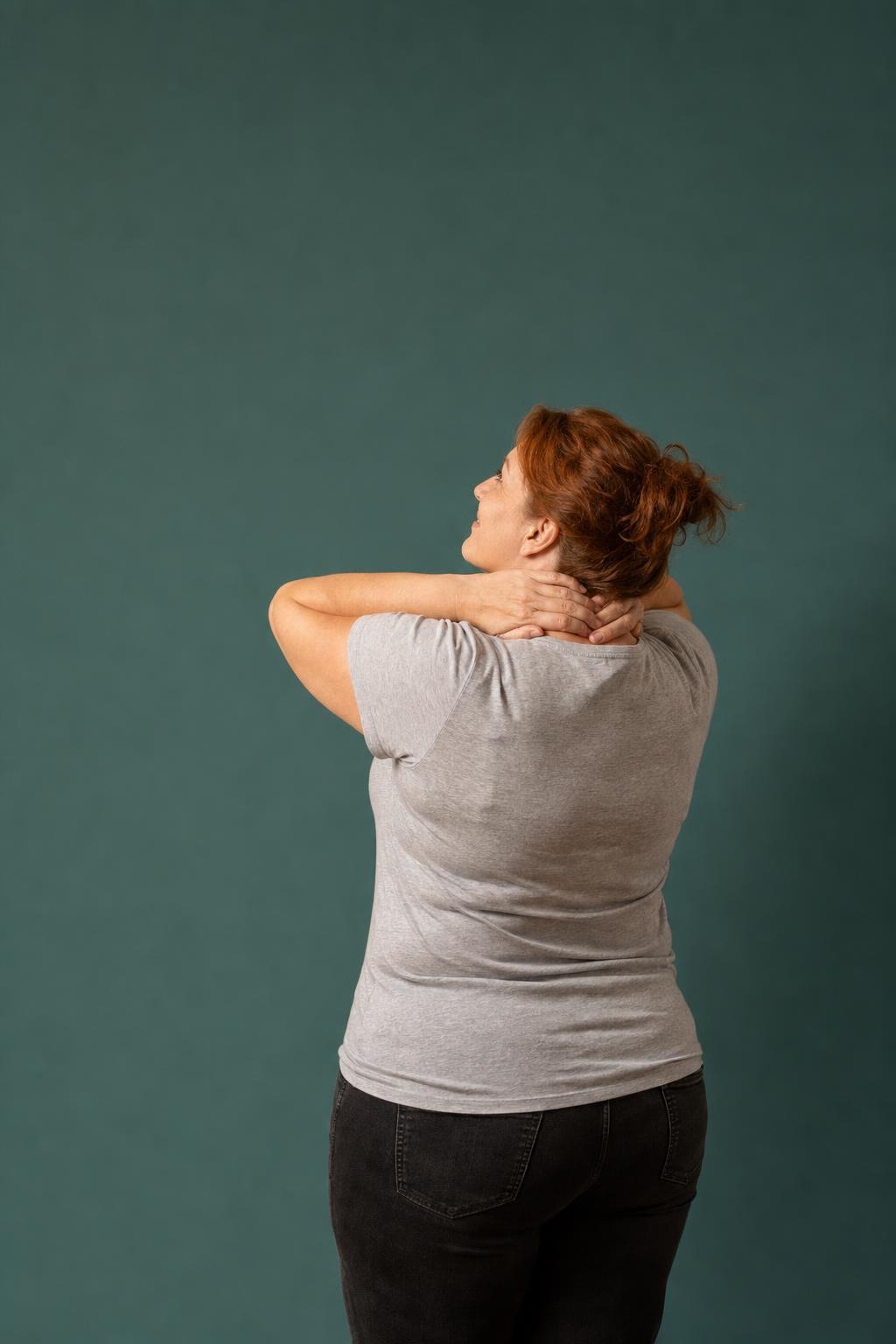
Menopause · 13 min
Menopause belly: belly fat during menopause
By Nazanin Ahmadi Mozafari, doctor
Knowledge · 12 min
Why am I not losing weight? 8 causes and what does work
By Nazanin Ahmadi Mozafari, doctor
Menopause · 13 min
Weight loss after menopause: why it works differently and what does help
By Nazanin Ahmadi Mozafari, doctor