
Knowledge9 min read6 September 2026
Professional weight loss help: what are your options?
You've already tried diets, started exercising more and still you're not getting anywhere. The kilos come back, or they simply don't come off. That's usually not down to you: with stubborn excess weight, professional help with weight loss is often more effective than starting again on your own. From your GP to a medical programme supervised by a doctor: below we compare all the options on approach, cost and reimbursement, so you can choose what suits your situation.
 By Nazanin Ahmadi Mozafari
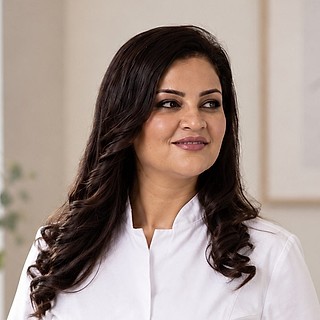 Medically reviewed by Nagita Grover-Khatri
What professional weight loss help is available?
Professional weight loss help comes in six options: your GP, a dietitian, a lifestyle coach or Combined Lifestyle Intervention (Gecombineerde Leefstijlinterventie, GLI: a supervised Dutch lifestyle programme), psychological support, medical weight loss with medication under a doctor's supervision, and as a last step weight loss surgery. Which option suits you depends on your BMI, your health and your previous attempts.
Why does losing weight on your own so often fail?
Losing weight under your own steam often fails because your body works against you, not because you lack willpower. After weight loss, your body produces more hunger hormone and uses less energy. That's how you end up in the familiar cycle of dieting, relapsing and starting again.
On top of that, excess weight rarely has a single cause. Sleep, stress, medication and hormones all play a part. Women going through menopause in particular notice that the approach that used to work now does nothing. Want to know which factors play a part for you? Then also read why am I not losing weight.
Professional support breaks that cycle, because an expert tackles the cause rather than just the symptom. That's exactly why we first look at the full range of options below.
Six forms of professional help compared
For most people, professional help starts with the GP (huisarts, the family doctor who is your first point of contact in Dutch healthcare): they assess your health, think along with you and refer you on in a targeted way. According to Thuisarts.nl (the Dutch GP association's patient website), with overweight you can go to your GP, a lifestyle coach, a dietitian or a physiotherapist, and sometimes to a 2-year lifestyle programme (GLI).
| Type of help | Suitable for | What you get | Reimbursement |
|---|---|---|---|
| GP | everyone with overweight | advice, health check, referral | basic package |
| Dietitian | anyone who wants to learn to eat better | personal nutrition advice | 3 hours per year, basic package |
| Lifestyle coach / GLI | BMI from 25 with increased risk | 2 years of support with diet, exercise and behaviour | GLI reimbursed, no deductible |
| Coach (also online) | anyone looking for support and motivation | personal coaching on habits | usually self-funded |
| Psychologist / POH-GGZ | emotional eating, binge eating, negative self-image | behavioural support or therapy | often reimbursed with a referral |
| Medical weight loss | BMI from 30, often after previous attempts | GLP-1 medication plus supervision by a doctor | usually self-funded |
| Weight loss surgery | BMI from 40, or 35 with a condition | operation plus long-term aftercare | basic package, under conditions |
The first five options focus on your behaviour and lifestyle. The last two are medical treatments for people who didn't achieve enough with those. We explain the most important choices below.
Losing weight with a coach: what can you expect?
Losing weight with a coach mainly means working on habits: eating behaviour, exercise, sleep and motivation. A good coach looks not only at what you eat, but above all at why you eat, and helps you build new routines step by step.
These days coaching can also be done entirely online. Losing weight with an online coach works through video calls and an app, which removes barriers if you have a busy life or would rather not go to a practice. When choosing, do pay attention to training and registration: "coach" is not a protected title, but "dietitian" (diëtist) is. So ask in advance about qualifications, working method and the experiences of previous participants.
Important to know: coaching works well for a few kilos too many and for behaviour change. With obesity (BMI of 30 or higher), coaching alone is usually not enough, because it does nothing about the physical feeling of hunger.
What psychological support is available for weight loss?
Psychological support for weight loss goes through your GP, who can refer you to a POH-GGZ (a mental health practice nurse at the GP's practice) or a psychologist. That makes sense with emotional eating, binge eating, stress eating or a negative self-image: patterns that no diet can change. If an eating disorder is suspected, specialised treatment is needed.
Emotions play a role more often than many people think: food is comfort, reward and relaxation all at once. Recognising that this plays a part is not a weakness, but often the very first step towards lasting results. That's why attention to behaviour and motivation is also a fixed part of a GLI.
Medical weight loss: when does medication come into the picture?
Medical weight loss comes into the picture with a BMI from 30, or from 27 with a weight-related condition, when lifestyle changes haven't achieved enough. A doctor then assesses whether treatment with GLP-1 medication is appropriate: medication that reduces your hunger and slows your digestion, so that you eat less without a constant inner struggle.
The best-known active substances are semaglutide (Ozempic, Wegovy), tirzepatide (Mounjaro) and liraglutide (Saxenda). The scientific results are substantial: with semaglutide 2.4 mg, participants in the STEP 1 trial lost an average of 14.9% of their body weight in 68 weeks, and with tirzepatide this rose to as much as 20.9% in 72 weeks in the SURMOUNT-1 trial. So they are not miracle cures, but proven effective medicines with caveats: side effects such as nausea, diarrhoea and constipation are common, especially at the start, and without lasting lifestyle change the weight often returns after stopping.
Supervision is therefore not a luxury, but a condition. These medicines are only available on prescription. Never buy them online without a prescription: you then have no certainty at all about what you're getting and no one keeping an eye on your health.
That's why at Qlinic, medical weight loss with injections always goes through our own BIG-registered doctor (the BIG register is the Dutch register of healthcare professionals), and the medication is delivered to your home. After that you speak to the doctor again every 4 weeks, so the treatment is continually adjusted to how you're doing. You usually notice the first effect after around 4 weeks, mainly because the constant feeling of hunger decreases.
Do you recognise that your hunger keeps winning over your good intentions? At Qlinic you are personally supervised by your own BIG-registered doctor, rated 5.0 on Google. See if it's right for you →
What does professional help cost and what does your health insurance reimburse?
A good part of professional help is reimbursed from the basic package (basispakket) of Dutch health insurance. According to Zorginstituut Nederland (the Dutch National Health Care Institute): help from your GP is fully reimbursed, dietary advice up to 3 hours per year, and a GLI in full and without your deductible (eigen risico). Weight loss surgery falls within the basic package under certain conditions.
For weight loss medication, things are different. It is only reimbursed in specific situations, usually only after completing a full GLI programme and under strict conditions. Some supplementary insurance policies also reimburse extra hours of dietary advice or an exercise programme; always check this in your own policy conditions. If you want to know exactly how that works, read whether you can get weight loss medication covered by insurance.
So you almost always pay for a medical weight loss programme at an online clinic yourself. At Qlinic a complete programme costs €250 to €850 per month, depending on the medication, plus a one-off supervision fee of €400. You'll find all current amounts under medical weight loss costs. That way you know exactly where you stand in advance.
Which help suits you?
The right help depends on your BMI, your health and what you've already tried. Use this as a guide:
- A few kilos too many and in need of structure? Start with a dietitian or a coach.
- BMI between 25 and 30 with health risks? Ask your GP about a GLI: 2 years of support, fully reimbursed.
- Does emotional eating or a binge eating pattern play a leading role? Choose psychological support (as well).
- BMI of 30 or higher and tried everything already? Then medical weight loss under a doctor's supervision is worth considering.
- BMI of 40 or higher? Discuss with your GP whether weight loss surgery is an option.
Not sure, for example because you're going through menopause and the familiar approach no longer works? That's exactly when a medical look at the cause pays off. So far we have supported around 50 clients with medical weight loss.
Tried everything, but still not losing weight? Take the no-obligation eligibility check and quickly find out whether medical weight loss under the supervision of our own doctor suits you. See if it's right for you →
Frequently asked questions about professional weight loss help
What is the best support for losing weight? The best support is guidance that fits the cause of your excess weight. For behaviour change, a dietitian or lifestyle programme (GLI) works well; with a BMI from 30 and strong hunger, medical supervision with medication can be more effective. A combination of lifestyle and professional support gives the most lasting results.
Which specialist helps you eat better? A dietitian is the specialist for eating better. Dietitians have a protected title and tailor their nutrition advice to your health and the medicines you use; basic health insurance reimburses 3 hours of dietary advice per year. A weight consultant (gewichtsconsulent) or lifestyle coach helps with healthy habits, but has no allied health training.
What psychological support can I get while losing weight? Through your GP you can be referred to a POH-GGZ or a psychologist, for example for emotional eating, binge eating or a negative self-image. A GLI also pays attention to behaviour and motivation. If an eating disorder is suspected, specialised treatment is needed.
How much weight do you lose in 1 month with Ozempic? There is no fixed number: the effect differs per person and builds up slowly. In the first 4 weeks you mainly notice that your hunger decreases; the weight loss then follows gradually. Ozempic is also officially a diabetes medicine. A doctor assesses whether a GLP-1 treatment suits you; never use it without a prescription.
Is professional weight loss help reimbursed by health insurance? Partly. The GP, 3 hours with a dietitian per year and a Combined Lifestyle Intervention (GLI) are reimbursed from the basic package. Weight loss medication is only reimbursed in specific situations, and you pay for a medical weight loss programme at an online clinic yourself. Check the current conditions with your health insurer.
Responsible for this information: Qlinic B.V., Markenhaven 25A, Amersfoort. Published: 6 September 2026. This article is general information and does not replace personal medical advice.
About the author
Nazanin Ahmadi Mozafari
Doctor · BIG 59925559301
Guides you from intake to follow-up and knows your file, no changing faces.
More about Nazanin Ahmadi Mozafari
Further reading


Weight loss medication · 9 min
Is weight loss medication covered by insurance? How it works in 2026
By Nazanin Ahmadi Mozafari, doctor

Knowledge · 12 min
Why am I not losing weight? 8 causes and what does work
By Nazanin Ahmadi Mozafari, doctor
Knowledge · 9 min
Weight loss medication and pregnancy: Ozempic, Mounjaro, Wegovy and Saxenda when trying to conceive, on contraception and while breastfeeding
By Nazanin Ahmadi Mozafari, doctor